


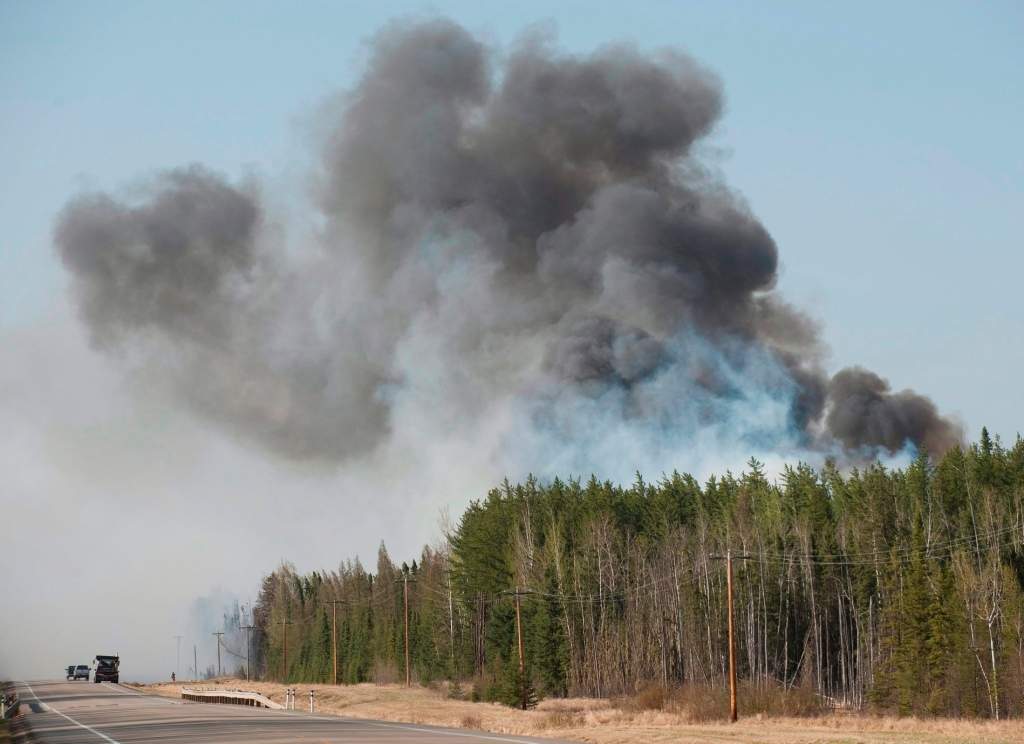
SLAVE LAKE, Alta. – A raging forest fire that has left one-third of this Alberta town in charred ruins appears to be coming under control.
An Alberta fire official told a news conference Tuesday that gusting winds have died down to about 30 km/h in the last 24 hours.
The weather change has given firefighters near Slave Lake some breathing room in their efforts to suppress the blaze, said Rob Harris, Alberta’s fire information officer.
"Firefighters were able to hold their ground," he said.
On Sunday, winds gusting to nearly 100 km/h drove a wildfire into the town’s southern limits and burned the town hall, library, radio station, businesses and dozens of houses.
The town’s 7,000 residents have been ordered to leave Slave Lake, and there is no timeline for their return.
Officials are going through the city to determine what areas of town can be safely inhabited.
The fire is one of two blazing around Slave Lake, which now cover an estimated 17,000 hectares of land.
The mandatory evacuation order remains in place for the community. However, RCMP Sgt. Patrick Webb said that officers were not strictly enforcing it.
In and around the town, 50 Mounties were patrolling, and finding residents who never left. Some ignored Sunday night’s evacuation order and stayed, said Webb.
"Despite the fact that there is a mandatory evacuation, there is no crime in staying there," Webb said.
"If someone is in their residence, safe and sound, we note where they are, encourage them to leave the town, but then leave them where they are if they choose."
Officers have received no reports of injuries or deaths from the fire.
RCMP officers are also helping with door-to-door searches in the largely abandoned town, which has no essential services.
Slave Lake is about 250 kilometres northwest of Edmonton.
Harris said weather forecasts include a temperature drop and thunderstorms, which means fire crews are expecting to see some lightning-caused fires over the coming days.
Lightning strikes cause one-third of all forest fires in Canada, according to Natural Resources Canada. The remaining two-thirds are caused by people.



Comments
Want to discuss? Please read our Commenting Policy first.