






Since Winnipeg’s encampment distance policy was enacted in November 2025, city crews have visited more than 200 sites.

Officials say 22 of those that were occupied have been cleaned, with the individuals previously living in them moved to more stable housing.
The policy prevents encampments from being established on public property within 50 metres of areas including schools and playgrounds, or 30 metres of transit shelters, bridges and rail lines.
Still, some residents feel the enforcement efforts are falling short. In Fort Douglas Park, there are still a number of tents set up along the Red River, with garbage covering a significant stretch along the water.
Those living in the area say it’s having a massive impact.
“Damage to other properties, having to spend thousands of dollars on security to keep buildings secure and residents safe,” explains Laurie Nealin, who lives near Fort Douglas Park. “There’s also the very unfortunate taking of drugs right on the doorstep of people’s residences.”
According to those living in the area, the issue became apparent about six years ago and has just continued to grow in scale. Camping in the park does violate the city’s encampment policy, with a number of signs posted along the river with that message.
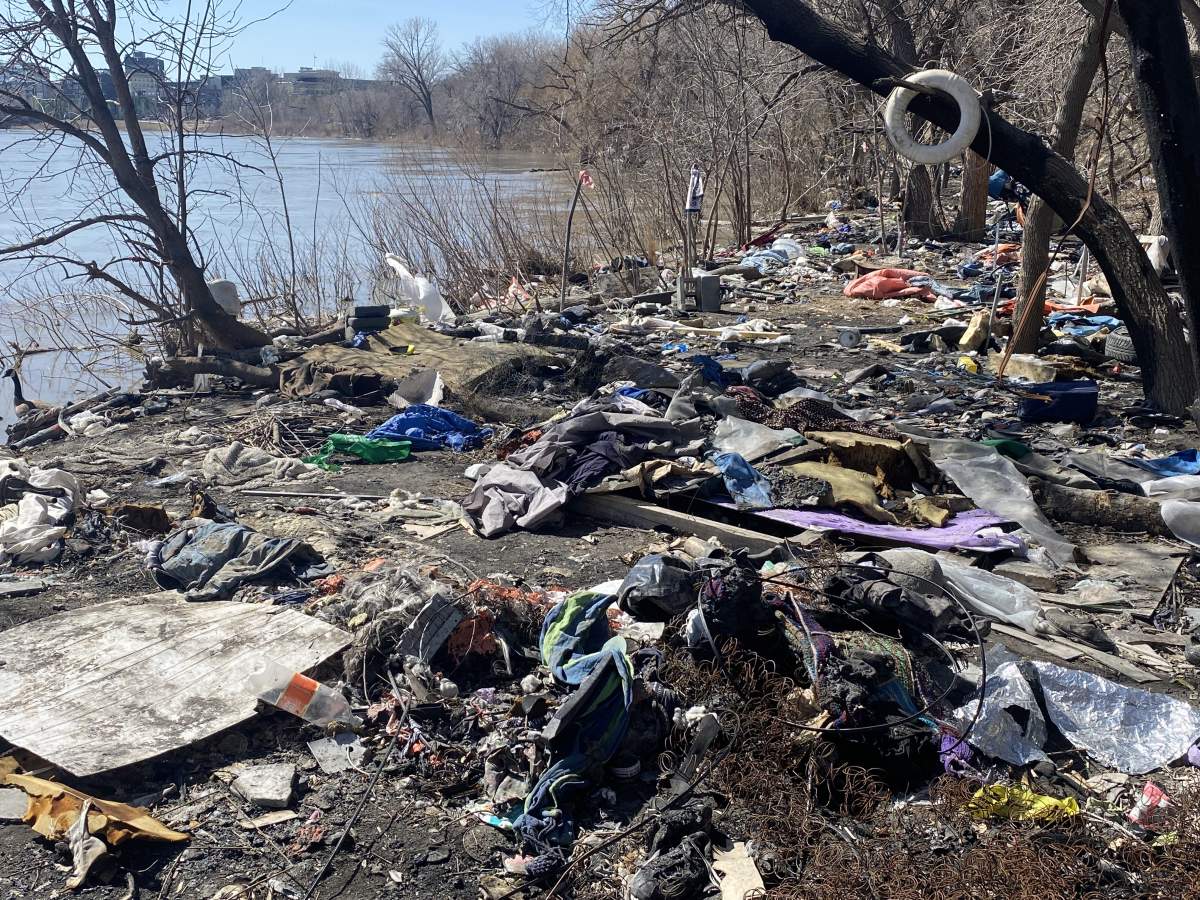
Others have taken the cleanup effort into their own hands. Michael Balingit owns Inner City Mobile Recycling, which offers junk pickup and property cleanout services. Balingit says his business has begun prioritizing scrap-clearing efforts at encampments like the one at Fort Douglas Park, which he believes can prevent fires and supports those living in encampments.

Get daily National news
“Just them knowing everybody isn’t throwing shade at them for being in encampments. We’re showing that everybody else is trying to pitch in and help them, knowing this is their home. Sometimes they do have mental health and they can’t physically clean themselves.”
The city is planning to ramp up enforcement as the warmer weather often comes with more tents being set up in Winnipeg. Mayor Scott Gillingham says the city is trying to strike a balance with its enforcement. The mayor points to a “compassionate” approach, but stresses that rules are still rules.
“Our staff don’t just go in and push people out, they go in and they educate, they go in and talk to people. They try to connect them to services, work with our outreach providers, working with our transit teams, our community safety officers. Making sure we’re trying to connect individuals to the services they need, but ultimately we do have rules, we do have an encampment policy we need to follow, and we need to make sure other people are following it as well.”
Nealin remains optimistic the policy will make a difference, but wants to see the results.
“Clean up abandoned encampments, then also direct people who may want to set up an encampment to a separate resource — other shelter, other places, transitional housing.”


This couple are criminals and addicts. Don’t trust these people.
Just wait till republican depression #2 drags your economy down even more.
#ArrestEndorserOfCrimeJamilMahmood
I’m reading the news about the city’s encampment policy. I feel for the ones that are ill, but more addicted people choose to be like that. The more you cater to that group the greater the numbers grow in the last five years. Our city elected people are not interested in a solution, you can tell how our downtown has gone to a hell in hand basket. I rarely go downtown, but today I walked from Memorial down Portage to Main & I felt like I was walking in the Geto. For years I hear of how & what changes have been made. Yet the Heart of Winnipeg is become a Slum. Embarrassing to the world. Shame on our elected politicians.