


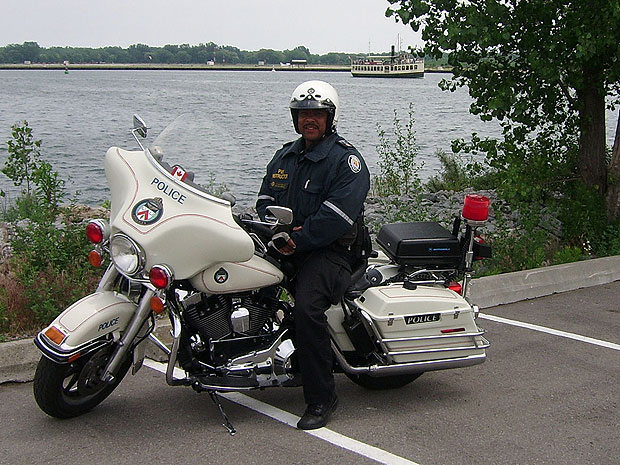
Constable Hugh Smith of the Toronto Police Service spent 12 years as a police vehicle operations instructor, teaching officers how to safely ride motorcycles and other vehicles.
Here are Constable Smith’s top ten motorcycle safety tips:
1. Take a course: It’s important for you to learn how to safely drive a motorcycle and to be evaluated by an instructor. “What we’re looking for is that they control the motorcycle, the motorcycle doesn’t control them,” says Const. Smith.
2. Make sure you have proper riding gear: A helmet is required by law, but riders should also have long sleeves, long pants, ankle boots and a jacket, even when it’s hot outside. “The sun just drains you,” he says. Also – think about road rash.
3. Make yourself visible: Many collisions are caused by a car turning into a motorcycle. So, you want drivers to see you. Wear a reflective vest or contrasting colours and make eye contact with drivers to be sure that they’re aware of you.
4. Slow down: Most fatal accidents are caused by excessive speed. Motorcycles are unstable vehicles, says Const. Smith, and they have a limited grip on the road. You don’t want to lose control around a turn.
5. Don’t ride impaired: You shouldn’t ride after drinking or consuming drugs, but you also shouldn’t ride when you’re tired, says Const. Smith. “You need 100 per cent of your attention.”
6. Ride with a buddy: Riding with friends allows you to occupy a full lane, makes you more visible and you can keep an eye on each other if something goes wrong.
7. Make sure your motorcycle is properly maintained: Check your vehicle frequently for problems. Tire pressure is especially important, says Const. Smith. A section of your tires about the size of a footprint is all that keeps you on the road, and any problems with tire pressure can be dangerous.
8. Communicate with other drivers: Make eye contact with drivers and make sure they’re aware of your movements. Consider using hand signals while turning, as indicator lights on motorcycles are very small. And if you’re comfortable with a specific group of cars, stay with them.
9. Scan the road: Many accidents are caused when cars turn into motorcycles or come out of driveways. If you’re aware of what’s happening around you, you can avoid dangerous situations. “Your head should constantly be moving on a motorcycle,” says Const. Smith.
10. Refresh your skills: No matter how long you have been riding, you will still be rusty after a few months off. Take a refresher course if it’s been a while or if you have a new machine. “Ask yourself, can I improve? Am I the best and safest driver?” says Const. Smith. He points out that police officers, including himself, have to re-qualify every year to keep riding.




Comments