


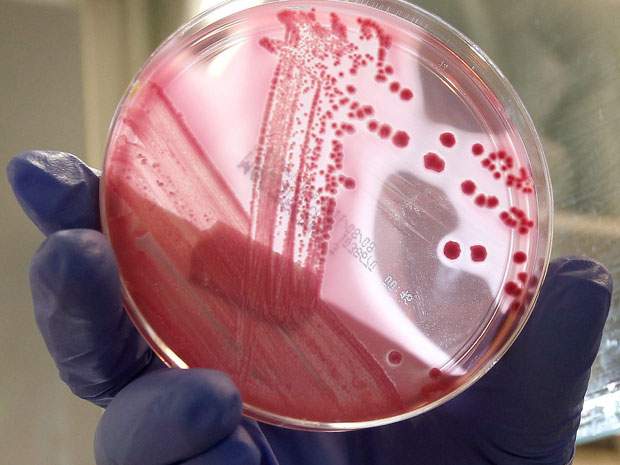
It is a common bacteria that lives inside of all humans, but different strains can cause deadly illness. E. coli (or Escherichia coli) is found in large quantities in the digestive systems of humans, cows and other mammals.
There are different kinds of the bacteria, some harmless and some not.
It has been responsible for a large number of food contamination outbreaks in a wide variety of countries.
The bacteria is most often found in meat, but is also found in unpasteurized milk, cheese, raw vegetables and even water. In most cases, it causes non-lethal stomach ailments.
Symptoms such as abdominal cramps, fever and diarrhea can appear within hours or up to ten days after exposure.
Some people who have E. coli can show no symptoms but can pass the bacteria to others through hand-to-mouth contact.
But Enterohaemorrhagic E.coli, or EHEC, is a deadly strain of the common form of bacteria. EHEC can be spread when those who have it don’t take proper hygiene measures, like bathing or handwashing.
It causes severe symptoms, ranging from bloody diarrhea to the rare hemolytic uremic syndrome (HUS). HUS can cause kidney failure and death.
Canadian cases
While the current outbreak of E. coli is spread in Europe, Canada has seen its share of cases.
Seven people died and 2,300 became ill in 2000 when E. coli bacteria contaminated the water supply of Walkerton, Ont.
It was determined that manure from a farmer’s field had seeped in to a nearby town well.
In 2006, three people were killed and 204 became ill (including one Canadian) after a tainted spinach outbreak in the U.S.
Canada usually has a fouw thousand cases of E. coli illness a year.



Comments
Want to discuss? Please read our Commenting Policy first.