


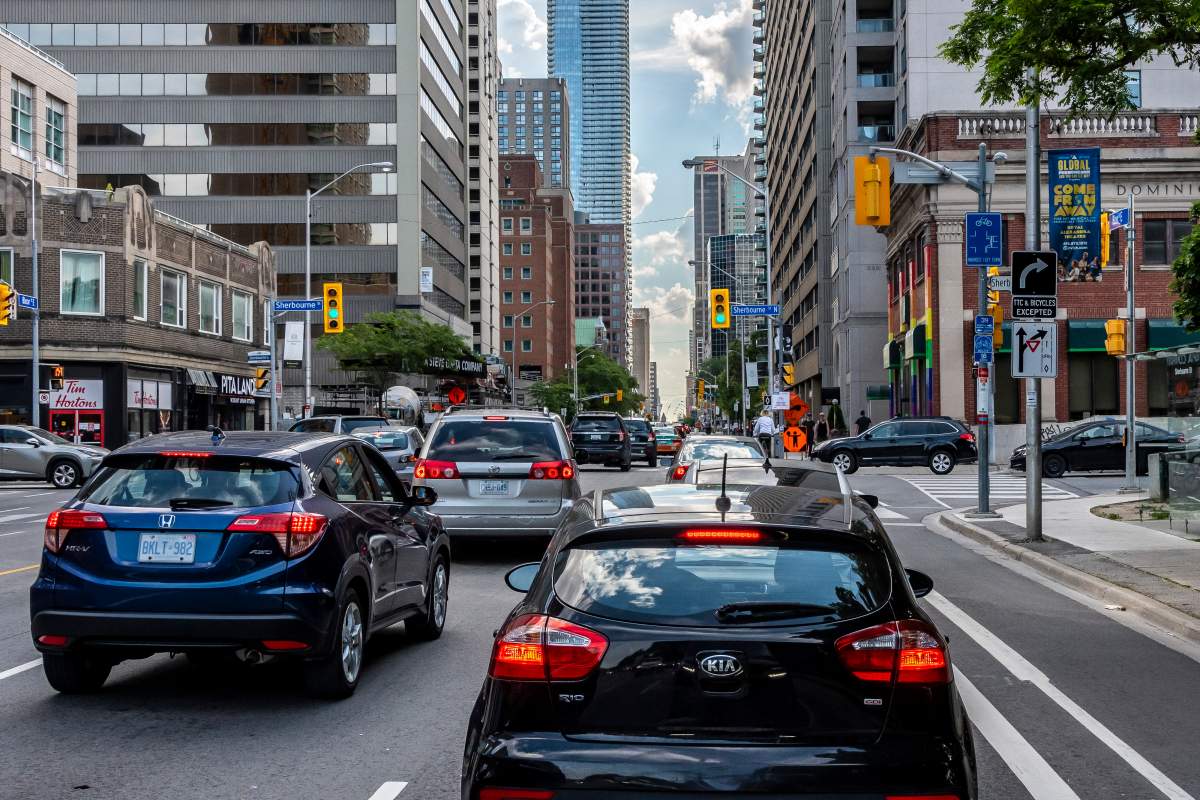
Toronto drivers lost more than four full days to rush-hour traffic last year, ranking the city as the second-most congested in Canada, according to a new report from navigation technology company TomTom.

The annual Traffic Index shows Toronto motorists spent about 100 hours stuck in rush-hour congestion in 2025, nearly four hours more than in 2024.
Only Vancouver ranked worse nationwide.
Drivers there lost 112 hours, or four days and 16 hours, to congestion last year, a figure that remained largely unchanged from the previous year.
In Toronto, the average congestion level was 47.7 per cent, down slightly from 2024. Despite that improvement, travel times increased and speeds slowed.

Get daily National news
A 10-kilometre drive took an average of 26 minutes and 40 seconds, and rush-hour speeds averaged 18.9 kilometres per hour.
Meanwhile, commuters who took the highway faced an average speed of 53.6 kilometres per hour, or just over half the posted speed limit.
Morning rush-hour trips averaged 29 minutes and eight seconds for a 10-kilometre drive, while evening commutes stretched to 34 minutes and five seconds.
The worst recorded day for congestion last year was on Valentine’s Day (Feb. 14.), when average congestion reached 76 per cent and spiked to 106 per cent at 6 p.m., with drivers covering just 3.8 kilometres in 15 minutes.
- Patient stabbed in Edmonton ER waiting room as dozens witness attack
- From ‘bird leg syndrome’ to solar storms: Roberta Bondar breaks down Artemis II mission
- Iran calls on the public to find the ‘enemy pilot’ as the US continues a frantic search
- CFIA continues recall for Tim Hortons heat-activated mugs after reports of burn risk


TomTom’s analysis is based on anonymized trip data covering more than 3.65 trillion kilometres worldwide.
Across the year, the data was anonymously collected from drivers within the larger metropolitan and central city areas, including fast roads and highway crossings.



Comments
Want to discuss? Please read our Commenting Policy first.