


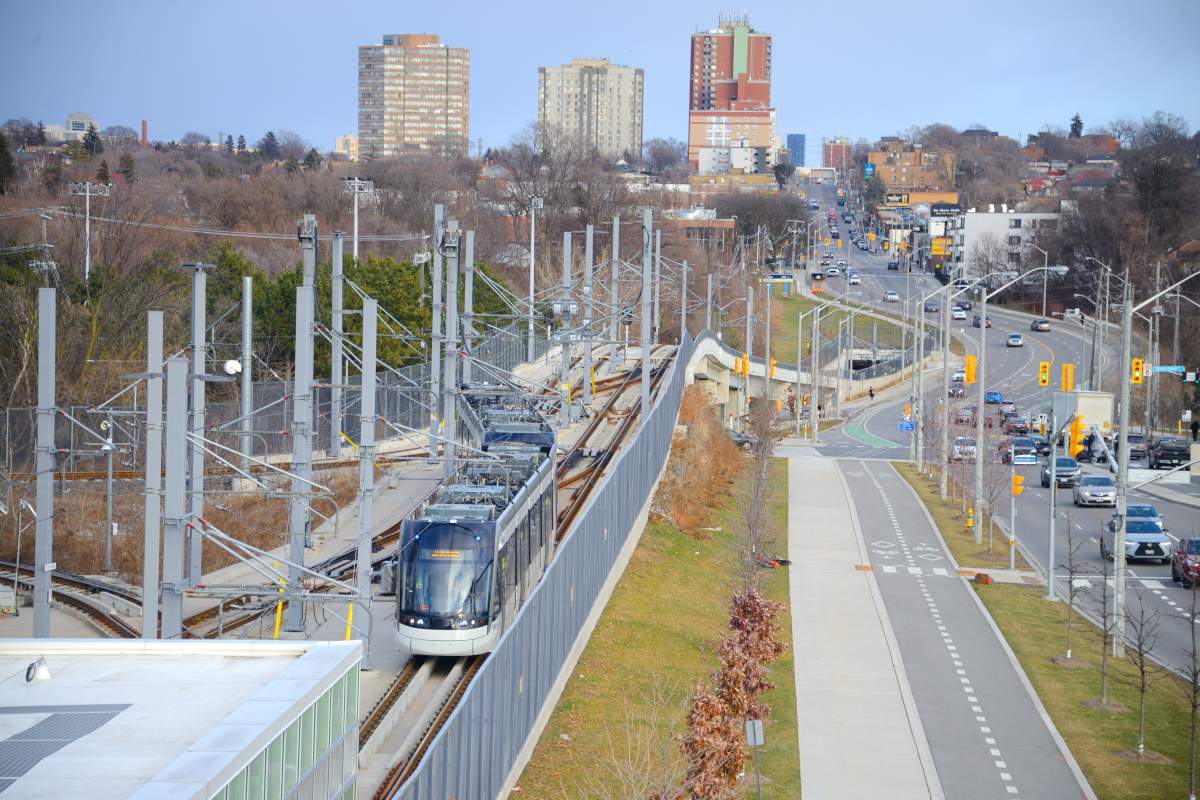
A provincial ban on new bike lanes that interfere with existing car routes is slowing — but not ending — Toronto’s efforts to expand active infrastructure.

The moratorium on bikes replacing lanes of traffic was introduced by the Ford government toward the end of 2024, stopping cities from adding new routes at the expense of cars.
A successful challenge to the law — which also looked to remove bike lanes from Toronto’s Yonge Street, University Avenue and Bloor Street — was filed by an advocacy group.
The government appealed the decision in a case that is still ongoing.
While the law remains contested, it appears to have already slowed the number of bike lanes being installed in Toronto, as city staff try to navigate the potential new rules.
A budget briefing note written by officials said roughly 30 per cent of Toronto’s bike lane expansion plans over the next two years would have removed lanes of traffic and need to be revisited.

Get daily National news
The amount of bike lanes being added in Toronto exploded during the COVID-19 pandemic, dropping dramatically in 2025 — the first year after the provincial government’s contested ban.
Over the past decade, Toronto has added roughly 176 km of new bikeways. Each year, the city added:
- 2016: 8.1 km
- 2017: 11.9 km
- 2018: 15.2 km
- 2019: 5.2 km
- 2020: 35.7 km
- 2021: 22.7 km
- 2022: 17.8 km
- 2023: 19.6 km
- 2024: 26.7 km
- 2025: 13.1 km


With the future of where new bike paths can be built in question, the city is pausing or deferring projects that interfere with traffic, only building those that don’t impact existing roads.
City staff said the balancing act has resulted in “some changes to planned delivery timelines and schedule reliability.”


Comments
Want to discuss? Please read our Commenting Policy first.