



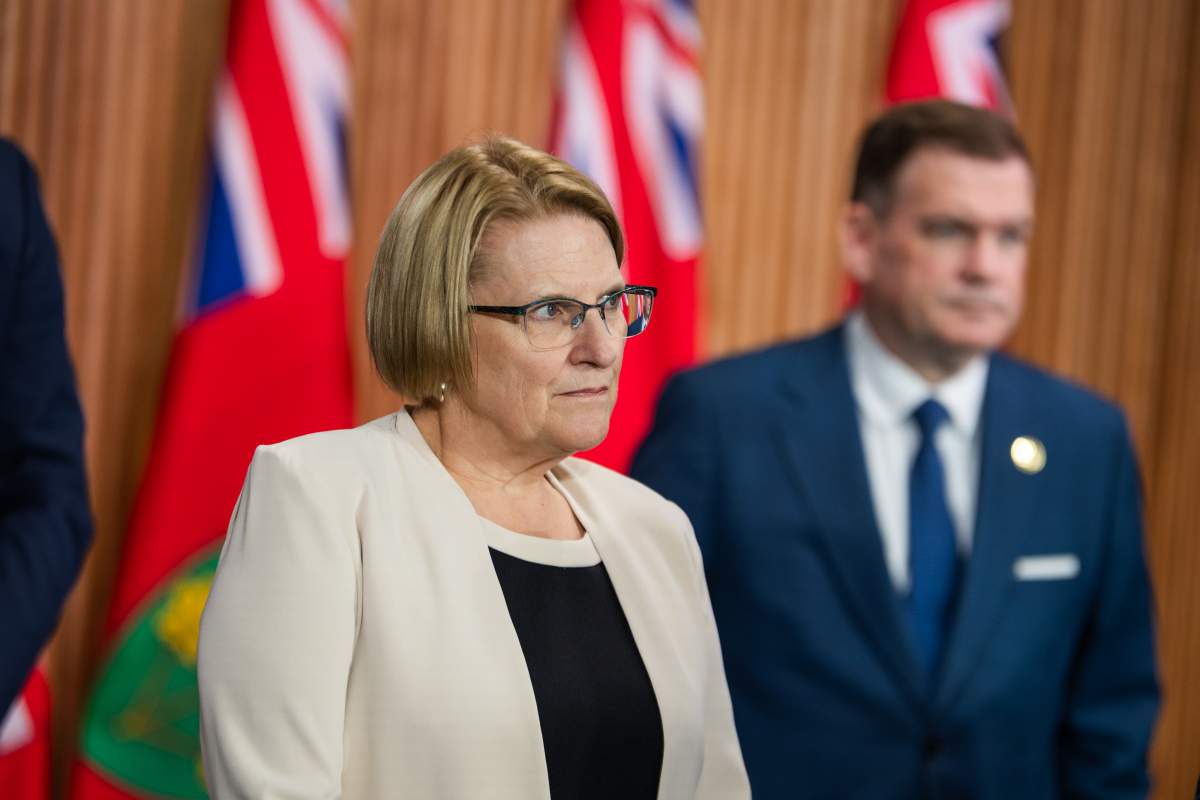
Ontario’s minister of health says she doesn’t want to see municipalities offering financial incentives to lure physicians to rural or poorly-served communities, a trend which has been described as an “arms race” or “hunger games” between different towns.

Over the past couple of years, as smaller or rural communities have struggled to find enough family doctors, local leaders have begun developing incentive programs to bring physicians to their residents.
During the summer of 2024, for example, Huntsville, Ont., started offering a relocation bonus of $80,000 to any family physician who agreed to work in the town for five years. Dryden, Ont., has offered moving costs, while Blanche River Health in Kirland Lake created a referral incentives program.
The moves were defended and championed by local politicians who said they needed them to ensure their residents could access health care, although leaders of other towns criticized them.
Health Minister Sylvia Jones, who is in charge of ensuring every resident in the province has access to primary and emergency medicine, joined the voices calling for the practice to end this week.

Get breaking National news
Speaking at a Rural Ontario Municipal Association event in Toronto, she said she didn’t approve of the individual incentives, despite two million people in the province still being without a family doctor.
“As we expand primary care teams across Ontario, we do not want to have municipalities fighting over those critical health care clinicians,” Jones said in response to a question from a delegate.
“I do not want to see municipalities cut cheques to individual physicians to make them, or encourage them, to move to their municipalities. But we need to build the supply, that’s why every single medical school in the province of Ontario has additional seats.”
Her office clarified that Jones doesn’t intend to pass legislation or introduce rules banning the practice, but wanted to see municipalities refrain as Ontario attempts to connect everyone to primary care by 2029.


That’s a goal the government recently touted it was on course to achieving, one year after announcing it.
On the eve of last year’s snap election, Health Minister Sylvia Jones launched a plan to spend $1.8 billion on primary care — rolling out more physicians, nurse practitioners and multidisciplinary teams.
Over four years, the strategy promised to connect hundreds of thousands to primary care every year. The targets were:
- 2025/26: 300,000
- 2026/27: 500,000
- 2027/28: 500,000
- 2028/29: 600,000
As of September, the government said it had already added 275,000 new people to primary care. Officials said they were confident that, with so many already signed up, they would reach their target of 300,000 for the first year.
The new strategy intends to fund 300 new and expanded interprofessional primary health-care teams, which will be used to supplement physicians to offer primary care to the two million people who, as of January 2026, still do not have access.


Comments
Want to discuss? Please read our Commenting Policy first.