


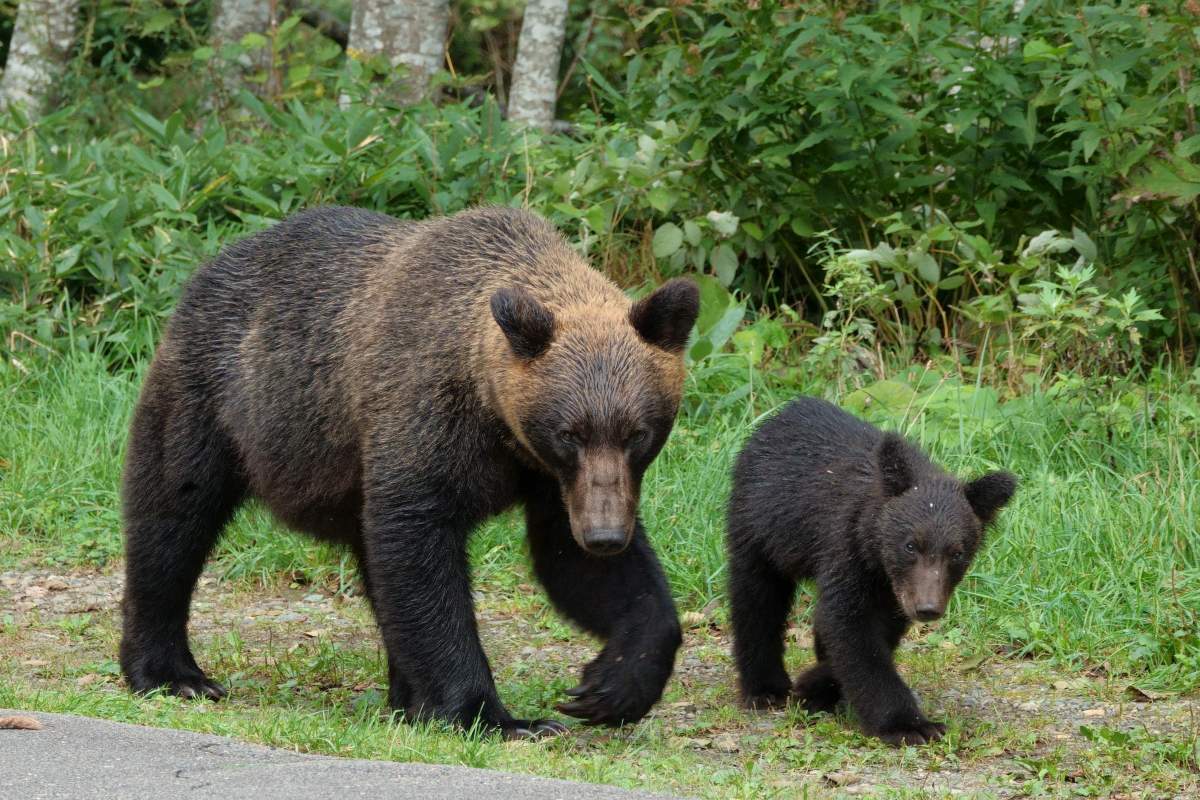
The smart watch of a Japanese hiker who was killed in a bear mauling has provided terrifying insight into the man’s final moments, including when the bear allegedly returned to retrieve his body.

His death comes during a year the country has seen a record number of bear attacks. Thirteen people have died since the start of April, according to the Japanese environment ministry. The total number of attacks stands at 220 — also a record, Japanese news outlet NHK reported in late November, with the most deaths occurring in the northern prefecture of Iwate.
GPS from the hiker’s watch, which logged the 1,661-meter route he was taking down Mount Rausu in Hokkaido, Japan’s northernmost island, and tracked his heart rate, was retrieved after the deadly attack on Aug. 14, Japanese newspaper Asahi Shimbun wrote.
The man was walking about 200 metres ahead of a friend near an area known as the “560-meter rocky peak,” when the friend heard a cry for help and ran down a slope to find the man being dragged by a brown bear into the bushes, according to the Japanese newspaper.


The watch’s data recorded erratic movements at around 11 a.m., including a sudden deviation from the hiking trail, a descent down a slope lined with trees, and circling in an area thick with foliage, CBS News reported.

Get daily National news
It also showed that the man’s heart stopped beating between 90 and 120 metres from the trail, indicating that he had died.
The watch did not move from the area where the man’s heart stopped all night, but began moving around 9:00 a.m. the following morning, suggesting the bear came back for his body, which it dragged more than 100 metres through the woods, Asahi wrote.
Three days later, a bear with two cubs was seen dragging the body in its mouth, the outlet added. Hunters killed all three, it said.
A pile of earth dug up by the bear was found nearby, and the remains of the man — who had recently gotten engaged — were discovered, the report added.


Officers later directed the man’s parents at Shari Police Station to identify the man’s remains, but advised them only to look at his face due to the extent of his injuries.
The mauling in Hokkaido came weeks after a man in a busy urban area in the Gunma Prefecture, near Numata railway station, north of Tokyo, was mauled while exiting a public restroom, sustaining minor injuries to his leg.
The bear fled the scene after the man began yelling and kicking his legs in self-defence, The Guardian reported.
The station where the bear attack occurred is centrally located in Numata City, close to homes and restaurants, and just one kilometre from the city hall.
The bathroom encounter came about a month after a bear wandered into a grocery store in the same urban area and reportedly attacked a person in the parking lot before lying on top of a customer and ransacking the food counter.
In the same week, a man was mauled to death by a bear while out picking mushrooms, and another person was found decapitated in a suspected bear attack, marking an uptick in such confrontations, Japanese officials said.
In response to the uptick in attacks, the Japanese government has set aside about 3.4 billion yen ($22 million USD) for bear-control measures in a draft supplementary budget, according to NHK. It has also mobilized the military to assist local hunters in trapping bears.
Armed police have also been permitted to shoot the animals as local hunting populations decline.


Comments
Want to discuss? Please read our Commenting Policy first.