



The Ford government has signed a memorandum of understanding with five Ontario First Nations to work together on the construction of a massive new transmission line taking power to the north.

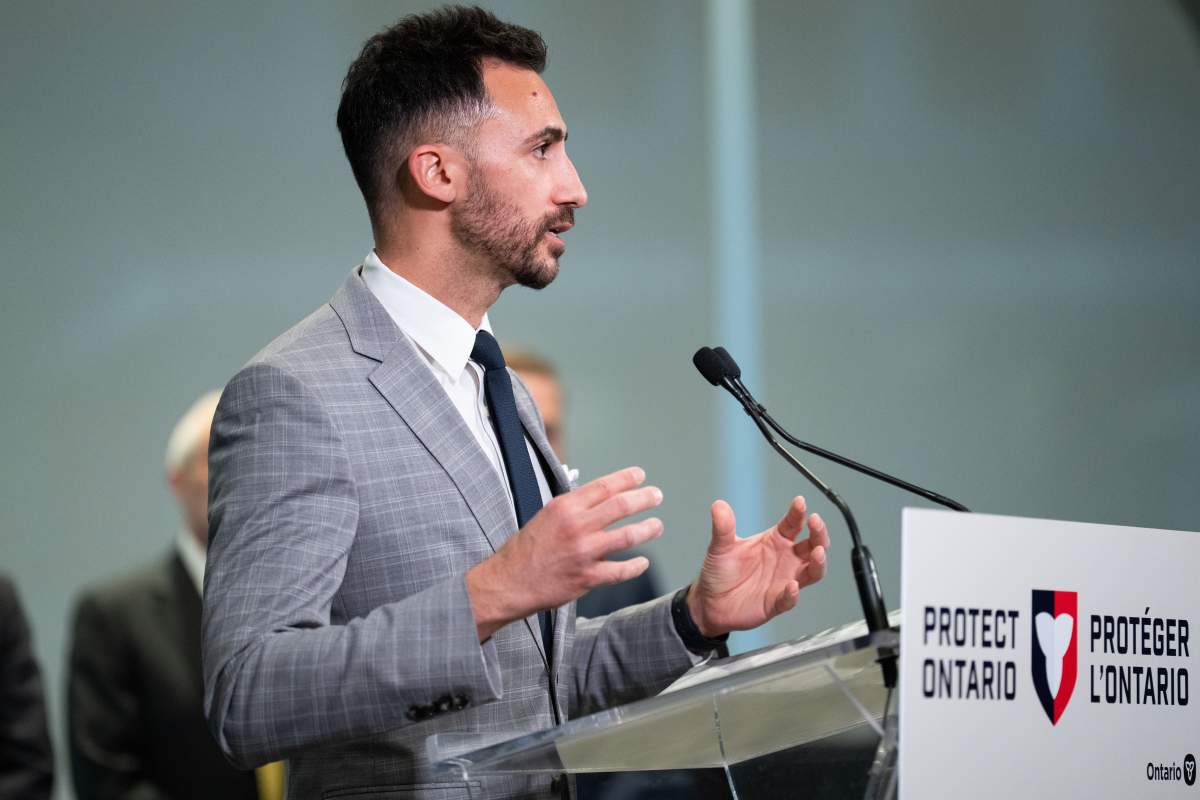
Last week, Energy Minister Stephen Lecce signed the agreement with the leaders of the Shawanaga, Wahnapitae, Dokis, Magnetawan and Henvey Inlet First Nations.
“What it does is it creates a governance structure for how we’re going to work together to build the future,” he said.
“The Indigenous (groups) are in the driver’s seat; they will be co-owners and players in building this out.”
The memorandum of understanding relates to the construction of a transmission line from the Essa Transformer Station in Barrie to the Hanmer Transformer Station in Sudbury. The 500 kV line is expected to be in service by 2032.
Lecce called it one of Ontario’s “most consequential” transmission lines.

Get breaking National news
The project is designed to move energy from southern Ontario, where a large nuclear fleet powers much of the province, to parts of the province’s north, as the government targets more economic activity around mining and critical minerals.
Citing an urgent need, Ontario has designated Hydro One to develop the line and declared it a “priority.”
Lecce said the five First Nations wanted a concrete agreement that they would be consulted for the project to move forward.
“Normally, we would designate a transmitter and the project proceeds,” he said.
“The First Nations wanted essentially an agreement that sets the culture and the tone for how nations work together to build energy infrastructure. (It is) really predicated on transparency, early engagement meaningful collaboration. They wanted to establish that as a prerequisite to get to ‘yes’ on the line.”


The agreement comes as the government attempts to reset its relationships with First Nations communities after bruising confrontations last spring over Bill 5, legislation which allows the province to designate special economic zones where laws can be bypassed.
That legislation led to protests at the legislature and legal action from First Nations groups, which argued it violated their rights and that the government had failed to consult.
At the end of November, Premier Doug Ford signalled a different approach, signing an agreement with Marten Falls First Nation. The agreement involved Ontario giving the group $40 million in exchange for their speeding up their assessments of a road to the Ring of Fire.
Ontario Green Party Leader Mike Schreiner, generally a fierce critic of the government’s relations with First Nations, called it “exactly the kind of agreement” the province should come to with First Nations.


Comments
Want to discuss? Please read our Commenting Policy first.