


The search for two young siblings who disappeared more than four months ago from their home in rural Nova Scotia is set to resume with a team of police cadaver dogs and their handlers.

Lilly and Jack Sullivan — aged six and four — were reported missing on May 2 from their home in Lansdowne Station in Pictou County.
The children’s family has said the siblings wandered away that morning from the home, which is situated in a heavily-wooded area.
This marks the first time RCMP Police Dog Services teams specifically trained in human remains detection will be used in this investigation. Past searches have used police dogs that are able to pick up human scent.
For the children’s paternal grandmother, Belynda Gray, this news offers some hope.
“I want them home more than I want to know what happened,” Gray said. “That can come afterwards. I need them found. I need to know.”
The two handlers and their dogs will be arriving in Nova Scotia from Alberta and British Columbia.
“Human remains detection dogs are specific to human remain odour, and that’s completely different from live searching,” said Staff Sgt. Stephen Pike, program manager of the RCMP Police Dog Services Training Centre, during a media availability Friday.


“What it comes down to is you search the areas of highest probability. So any investigation would have to direct you or point you into areas of highest probability.”

Get daily National news
RCMP would not provide details on when the searches would be taking place or at which locations.
Spokesperson Cindy Bayers said they were withholding that information “in consideration of the investigation and officer safety.”
She added there is “nothing definitive to support the children are deceased,” but that other searches to date have not located them.
“Deploying the human remains detection teams at this point aligns with the investigative efforts to date. All scenarios are being considered; it’s critical for investigators to remain open to all possibilities to ensure our investigation is fully comprehensive,” Bayers wrote in an email.
The investigation into Lilly and Jack’s disappearance has included multiple searches by hundreds of volunteers and police from the surrounding area.
Authorities scaled back the ground search six days after they went missing, saying it was “unlikely” the children were still alive. Police have said there is no evidence of abduction, and court documents indicate polygraph tests on the siblings’ parents suggested truthful answers.
Investigators have also conducted forensic examination on items such as pieces of a pink blanket believed to belong to Lilly,
“To this date, we’ve received over 800 tips. We’ve done 80 interviews, over a thousand tasks, and reviewed over 8,000 videos,” said Nova Scotia RCMP spokesperson Cpl. Guillaume Tremblay.
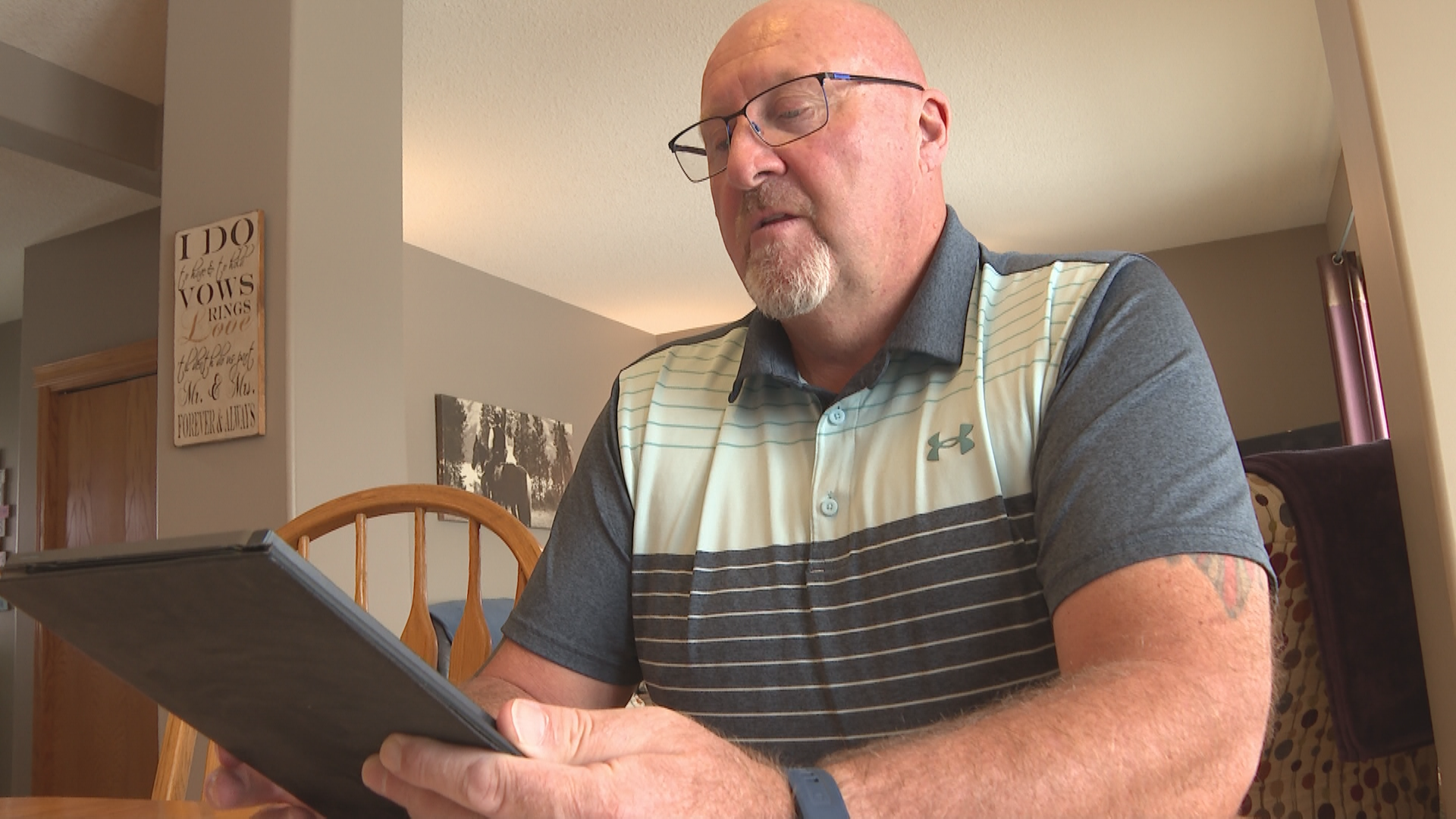

“Certainly there’s a lot of work in missing persons investigations. And this is the next step with our resources. We’re looking at every resource that’s available and investigators are working very hard every day on this file.”
‘Extinguish all possibilities’
The RCMP Police Dog Services handlers said their dogs can detect remains buried several feet underground, water and among ashes.
Whether they can detect anything can depend on conditions and variables, such as the rate of decomposition, weather and the presence of wild animals.
“A lot of it is environmentally based and, for example (…) ‘What was the person wearing? Where do they pass on? Is it in the fall? Is it during the mid-summer?’ All that will have an effect on the human body,” said dog handler, Sgt. Dave Whalen, who is part of the team heading to Nova Scotia.
Observers like retired police investigator, Jim Hoskins, says this new development indicates police know more than they can say.
“They know something that is worth looking at. But the question is, where is it and what part of the community are they searching for?” said Hoskins.
“When you call cadaver dogs in this late, it’s for one reason: it’s because they are most effective when they’re looking for decomposition. Where are they looking for a decomposition and why? What information do they have that takes them to that particular position?”
As for a timeline on the search, police say it’s difficult to say.
“There’s no real timeline to follow until you extinguish all possibilities,” said Pike.
— With files from Heidi Petracek and Mitchell Bailey
Comments