

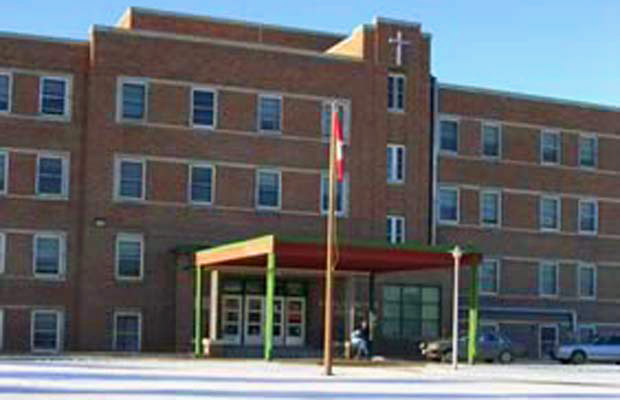
SASKATOON, Sask. – Forty sleeping, elderly residents of a long-term care home in Humboldt had to be woken and evacuated early Sunday after carbon monoxide from a failed boiler got into the heating vents.
Twenty-five residents, all over 70, were taken to hospital with headaches, nausea and other symptoms, said Kelvin Fisher, director of rural health and planning for the Saskatoon Health Region. Two visitors and five staff members from the Dust Wing of St. Mary’s Villa were also taken for treatment.
"No doubt it certainly was traumatic for them. I do have to give credit to our staff and to the firemen and ambulance personnel. They did a phenomenal job in keeping things as calm as possible," Fisher said.
All but one were well enough to return to their home at St. Mary’s Sunday night, where the boiler had been repaired and air quality tests showed it was safe, Fisher said.
"The situation is completely under control," Fisher said.
A woman in her late 80s, who had a pre-existing heart condition, suffered a mild heart attack. She remains in hospital in stable condition, said Dr. Warren Huber, chief of staff for Humboldt District Hospital.
"There are potential long-term effects associated with carbon monoxide poisoning. At this point there’s no way of knowing anyone that will indeed suffer them," Huber said.
Staff working the overnight shift first suspected carbon monoxide at around 3 a.m. when they experienced symptoms of the gas poisoning.
A SaskEnergy employee called to test the air confirmed their suspicion, resulting in a large, orderly evacuation that involved "a very significant call back" of nurses, doctors, ambulance attendants, firefighters and care-home employees, Fisher said.
Within an hour, 38 residents were moved to a safe wing in the building and 24 of them were then transferred to Humboldt District Hospital, along with the symptomatic staff and visitors.
"To move 38 residents in the middle of the night, wheelchair bound, non-ambulatory, some of them, we certainly would not feel it appropriate to move them until we had confirmation that was a requirement to move them. That’s not something we would take lightly," Fisher said.
The sudden influx of patients posed a significant challenge for hospital staff, where the emergency room was hopping.
"Our emergency room was full to capacity. People were in hallways. They were being deployed to other parts of the hospital for treatment and observation," Huber said.
The hospital has 36 in-patient beds and 10 day surgery spaces, some of which were used that night.
Individuals who were exposed have been tested repeatedly and all show "manageable" and declining levels of carbon monoxide. No further treatment is needed, Huber said.
There were no carbon monoxide detectors in the building at the time, but several have now been installed, Fisher said.
The detectors are not standard equipment in the area’s care homes, but the matter will be discussed with facilities managers in the coming days, he said.


Comments
Want to discuss? Please read our Commenting Policy first.