

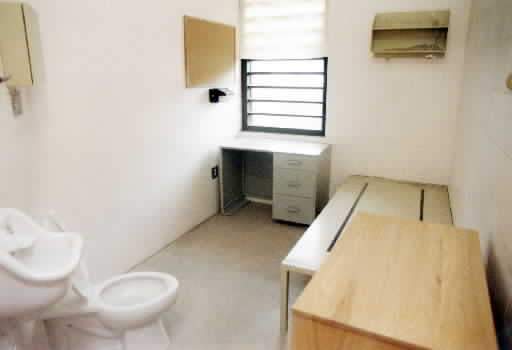
The death of 51-year-old Regional Psychiatric Centre (RPC) inmate Larry Richard Black in February 2009 was a suicide, a jury ruled Thursday at the conclusion of a coronor’s inquest in Saskatoon Court of Queen’s Bench.
The five-member panel found the medical cause of Black’s death at Royal University Hospital to be respiratory failure due to pneumonia — the ultimate consequence of infection from wounds Black had inflicted on his own abdomen with a blade from a disposable razor.
After deliberating for about an hour, the jury made no recommendations of ways to avoid similar deaths in the future, concluding that appropriate actions have already been taken.
Originally an inmate of the Saskatchewan Penitentiary, Black was transferred to RPC in November 2008 because of psychiatric issues which were not described in detail at his inquest. His criminal record and the length of his sentence were not discussed.
Prior to his death, he was housed in the RPC’s hospital wing because of uncontrolled diabetes. On Feb. 12, 2009, Black obtained a disposable razor from a staff member and took it apart inside his cell, then used the blades to cut himself before pressing a button in the cell to summon a nurse.
He was apologetic and co-operative with staff and emergency workers who responded to the situation.
RPC staff who testified at his inquest said Black was a survivor of the Indian residential school system who had been looking forward to receiving a substantial amount of compensation money from the federal government. They said he was not considered to be at risk of suicide and was behaving normally on the day of the incident.
Black was transported to hospital, where one of the blades was found embedded in his abdomen, causing a bowel perforation. He underwent surgery and later developed a septic infection, dying 10 days after the incident.
Under the provincial Coronor’s Act, a public inquest is held whenever a person dies while an inmate of a jail, federal prison or police lockup, unless the coronor is satisfied the death was due entirely to natural causes and was not preventable.
Black’s death was not reported to the coronor’s office until 16 days after it happened, because of confusion about who was responsible for that task, his inquest heard this week. The delay prevented investigators from examining the body and the scene of the incident. No autopsy was performed.
A subsection of the Coronor’s Act directs correctional staff to notify the coronor when an inmate dies. However, it also specifies that when an inmate dies after being transferred to an outside hospital, the person in charge of the hospital should report the death.
Following an internal Correctional Service of Canada investigation into the mishap, RPC supervisors received clarification that it is the institution’s policy to notify the coronor of all inmate deaths, regardless of whether they happen in an outside hospital.
Black’s death also prompted a change in RPC policy regarding inmates’ access to razors blades, limiting it to a shorter period of time each day.



Comments
Want to discuss? Please read our Commenting Policy first.