


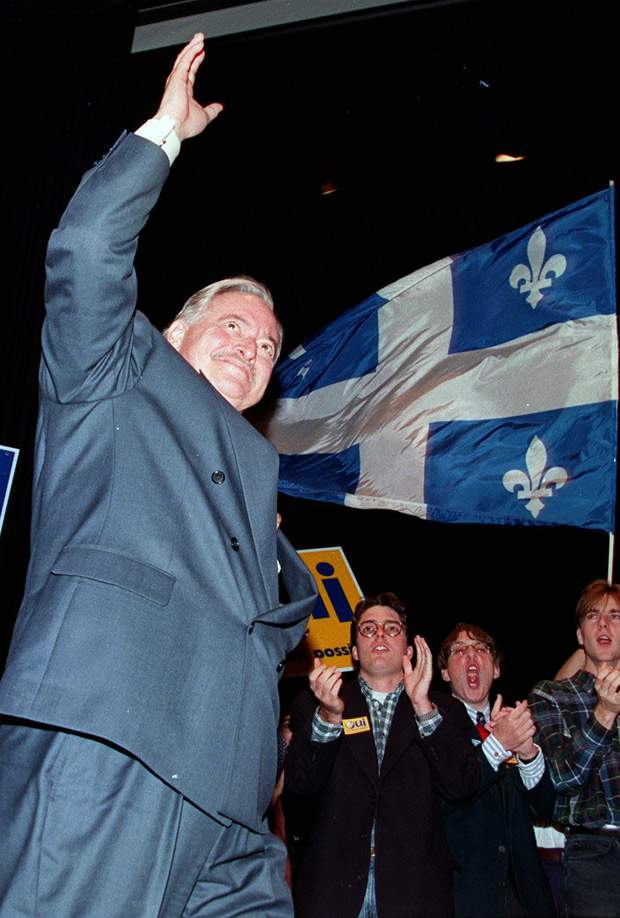
MONTREAL, Que. – Jacques Parizeau says he now wishes he’d stayed on to lead Quebec to independence after the 1995 referendum.
He says he should never have resigned as premier immediately after the sovereigntist defeat 15 years ago, on Oct. 30, 1995.
He told a Montreal radio station Friday that there were two things he didn’t know at the time – and wouldn’t have quit if he had.
First, he says, didn’t realize how many dirty tricks the pro-Canada side was playing during the campaign. Over the years, there have been allegations of illegal campaign spending and ineligible voting.
Also, he wrongly believed his successor – Lucien Bouchard – would work to lead Quebec to independence.
Parizeau answered a terse, "Yes," when asked on Friday whether he was disappointed in Bouchard.
Parizeau has expressed dismay this week, the 15th anniversary of the referendum, that his Parti Quebecois heirs have done lots of talking about independence but not taken any action.
"If I’d known," Parizeau wistfully told his interviewer, Paul Arcand.
"I was convinced when I left and was replaced by Lucien Bouchard – who was extraordinarily popular in Quebec – that he would continue the movement.
"If I’d known all that on the night of the referendum, I certainly wouldn’t have quit."
Instead, Parizeau gave a bitter referendum-night speech in which he blamed the sovereigntist loss on "money and the ethnic vote," and promptly walked off into the sunset.
His successor, Bouchard, was a political superstar at the time.
But instead of marching into another sovereignty campaign, Bouchard made his biggest priority tackling the province’s budget deficit.
Over time he sought to placate activists within his own party by making vague promises to hold a referendum only after some ill-defined "winning conditions" had been assembled.
All three of the PQ’s more recent leaders, including current boss Pauline Marois, have been equally vague.
Parizeau remains a hero with his party’s more militant members. His public comments this week have caused Marois some discomfort; she faces a leadership review next spring.
One newspaper story Friday suggested that an internal letter was floating around Pequiste ranks comparing Marois unfavourably to Bloc Quebecois Leader Gilles Duceppe.
Parizeau has also called Duceppe the movement’s best spokesman.
But he insisted in Friday’s radio interview that he also admires Marois; he simply wants to see his old party tackling serious questions about sovereignty once again.
What’s the monetary policy for an independent Quebec? Its military policy? Who’s talking to foreign governments to build the international friendships Quebec would need after a Yes vote?
Parizeau says his old party needs to be working on these things.
On that score, he compliments Duceppe for a recent trip to Washington. The Bloc leader didn’t manage any face-time with senior officials but he did meet with people on Capitol Hill and assured them the United States would find an ally in an independent Quebec.
He says Marois should be doing the same thing.
"It’s not about talking. It’s about doing the preparatory work for Quebec independence," Parizeau said.
"Nothing would make me happier than seeing Madame Marois take this preparation question by the horns, run with it and say, ‘This is where we’re going.’
"I have plenty of admiration for Madame Marois. I’m the one who named her minister of finance."
Parizeau says he understands that, in the aftermath of a turbulent referendum, Pequiste politicians needed to keep things calm for a while.
He’s frustrated, however, that the period of tranquility has lasted 15 years. He dismisses the notion that, because polls say Quebecers don’t want another referendum, the PQ shouldn’t work towards one.
In fact, he says, the party owes it to voters.
"You can’t go into an election saying, ‘We’re for independence but we’ll tell you another day what we intend to do with it,"’ Parizeau said.
"People have a right to know where we intend to lead them."
And he says that, if given the option, Quebecers might surprise people by voting in favour of the cause.
"When politics is interesting, people go vote."



Comments
Want to discuss? Please read our Commenting Policy first.