

NEW ORLEANS – The ongoing effort by BP to capture oil from a ruptured deepwater well in the Gulf of Mexico yielded early results Friday as the company was able to siphon some of the leaking crude into tankers on the water’s surface.
But the wary optimism generated by the tricky ‘cut and cap’ operation was quickly offset by the discovery of brown oil globs washing up on the white-sand beaches along Florida’s Panhandle, a development that further complicates a cleanup effort already beset by logistical problems.
"We now have a battle line, if you will, that stretches from Terrebonne Parish, Louisiana, over to around to the beaches by Pensacola, Florida. This is an extraordinarily wide area of beaches," said retired U.S. Coast Guard Admiral Thad Allen, who is commanding the federal government’s response to the oil spill.
"The scope of this thing is starting to extend to the point where it’s rather unprecedented."
The slick’s arrival in Florida came as President Barack Obama, showing a flash of anger that’s been missing from his earlier remarks, warned BP against "nickel and diming" Gulf Coast residents suffering economic hardship because of the spill.
During a day trip to New Orleans and Grand Isle, La., Obama sharply criticized BP for reported delays in approving compensation payments while spending $50 million on a damage-control advertising campaign and planning a $10.5 billion quarterly dividend to shareholders.
"They’ve got moral and legal obligations to the Gulf," Obama said. "They say they want to make it right, that’s part of their advertising campaign. Well, we want them to make it right."
The U.S. president said it was "way too early to be optimistic" that BP’s latest attempt at containing the oil spill would be successful.
BP successfully placed a `top hat’ containment cap atop a riser pipe on the broken wellhead on the sea floor. Live video cameras showed oil continuing to spew out of vents built into the containment device to prevent water from seeping in and forming ice crystals that could block the flow of crude.
The plan is to gradually close off the vents so more oil can be sucked through a hose to the surface of the Gulf.
It’s estimated BP is siphoning oil at a rate of about 1,000 barrels a day so far. The damaged well has been spewing between 12,000 and 25,000 barrels a day since April.
Allen said the containment cap had not made a perfect seal over the riser pipe, so oil may still be able to escape even after the vents are closed.
"Generally, progress is being made. I think we need to caution against over optimism here," said Allen.
BP executives were more upbeat about the procedure.
"I’m actually pretty confident this is going to work. It probably won’t capture all of the flow, but it should capture the vast majority," said Doug Suttles, BP’s chief operating officer.
Obama’s trip to the Gulf was his third since the spill began April 20, and his second visit in the last week alone. He arrived in this visit to find conditions along the coast have deteriorated significantly.
With gulf currents and shifting winds sending the leaking oil into a multitude of directions, the spill has now fouled the coastlines of four states – Louisiana, Mississippi, Alabama and Florida.
Officials analyzing the spread of oil are witnessing the "disaggregation of what was never a monolithic spill into a number of smaller spills," Allen said.
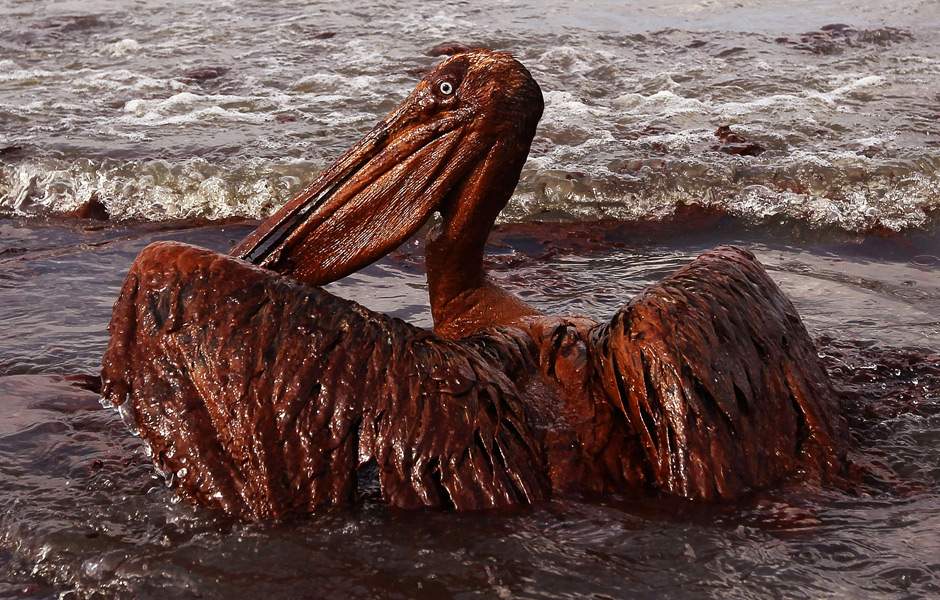
On Grand Isle, La., a barrier island protecting the wetlands south of New Orleans, wildlife rescuers have reported the number of oil-covered birds being found has doubled in the past few days.
Oil has also begun streaming into Barataria Bay, southwest of the Mississippi River.
"We can handle hurricanes, but with this oil coming and the (well’s) valve not closed, it’s going to be a marathon," David Camardelle, the mayor of Grand Isle, said in a televised interview.
"We’re not getting enough booms," he added, referring to devices that allow controlled burning off of the oil. "And a boom is not going to work in the major passes that protect the estuaries."
While BP has received the bulk of criticism for being disorganized, unresponsive and secretive in its handling of the crisis, there is growing anger being directed at Obama and the federal government.
"We have a federal government that is incompetent. How many times does Louisiana have to die before you realize this?" said Garland Robinette, a popular New Orleans radio host, who has become the Gulf Coast’s unofficial voice of outrage in the 46 days since BP’s Deepwater Horizon’s rig exploded and sank.
"Has anybody else lost faith? We have a country and a company that can’t close a hole in the ground."
The U.S. president is also taking heat for his decision last week to place a six-month moratorium on deepwater oil exploration, a move Louisiana residents say could threaten 20,000 oil-services jobs.
"If these big (deepwater) rigs ever leave the Gulf… and go drill in long-term contracts off the coast of Africa, they are not coming back any time soon," said Louisiana Senator Mary Landrieu.
Obama said Friday he needed the results of an independent commission before determining whether oil drilling could be safely resumed, but said he would ask whether the results could be ready in less than six months.
"If they can front-load some of the analysis of what went wrong and can do that more quickly than six months, let me know. Don’t hold the results," he said in New Orleans.
On his arrival in New Orleans, Obama was greeted by a front-page, above-the-fold editorial in the Times-Picayune newspaper that questioned if he were listening to concerns about the economic calamity unfolding as a result of the spill.
"Your visit is appreciated, Mr. President. But visiting Louisiana is not the same as listening to us and answering our questions," the newspaper said.



Comments
Want to discuss? Please read our Commenting Policy first.