


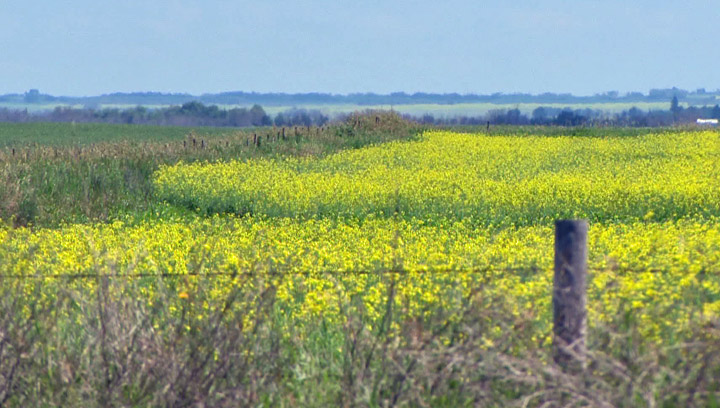
Farmers have begun harvesting some of southern Alberta’s crops. However the Canola Council of Canada is urging canola producers not to start too soon. Canola is ripening and farmers are expecting a good crop this year.

“In southern Alberta things are looking really good,” said Autumn Barnes, the Council’s Canola Agronomy Specialist in Lethbridge. “We’ve had moisture this year. We’ve had some good temperatures. It’s been a little on the cool side but things are looking really good.”
That’s happening in spite of some major hail storms this summer. However much of the hail damage came while canola was flowering and a lot was able to come back.
“I’ve heard estimates of about 20 percent of the canola that was hit was pretty severe and about 80 percent is more likely to recover.” said Barnes.

Get daily National news
With harvest looming, she says only a few farmers have begun swathing their canola.
“Towards the end of the week we’ll see a little bit more get going. But, that being said, we really want to caution producers not to start swathing too soon. Typically we see a better yield advantage and higher oil content if we swath around 60 percent seed color change.”
At the very earliest, the council advises producers not to begin swathing until their canola’s risen above 40 percent seed color change.
Barnes said to examine the seeds in pods on the main stem of their canola to find out how much their color’s changed, starting with the lower pods. If all of the seeds are dark brown or black they’ve completed a full seed color change. She also said to check pods higher up on the main stem. Some of the ones she examined for us had some seeds that were green, some were spotted and some were black.
“What we’re seeing is about 50 percent seed color change on this specific plant,” she said. “So this field is good to be swathed.”
Barnes and the Canola Council of Canada strongly urge farmers to check their fields before they swath them.
“Even though producers are itching to get out and get canola swathed,” she said, “it’s really important to remember not to get going when they haven’t assessed fields and when canola hasn’t reached that 40 to 60 percent seed color change.”


Comments
Want to discuss? Please read our Commenting Policy first.