

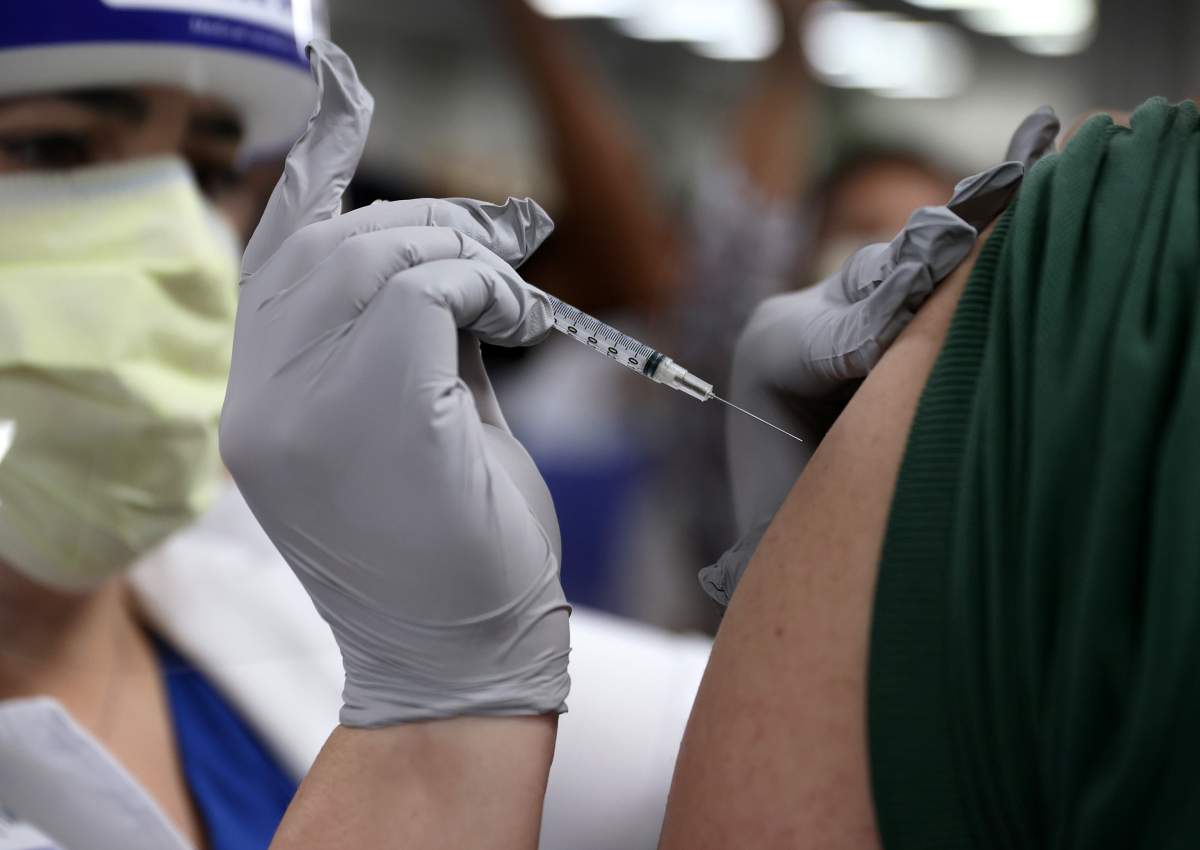
While other provinces focus on frontline workers, Quebec stands alone in its decision to begin its COVID-19 vaccination campaign with residents of long-term care centres. And medical experts say the province’s strategy makes sense.

“I think that’s the correct way to do things,” said Dr. Quoc Nguyen, a gerontologist at the Université de Montreal hospital centre, noting that the care home residents are particularly vulnerable to the novel coronavirus
Older people are at a significantly higher risk of developing serious cases of COVID-19, he said in a phone interview this week, and people in long-term care are often already unhealthy, putting them at even higher risk.
READ MORE: How long will the COVID-19 vaccine protect you? Here’s what we know so far
While the Pfizer vaccine has been proven to be effective at preventing people from getting COVID-19, Nguyen said there’s not yet hard data showing it prevents people who are asymptomatic from spreading the disease.
“It’s better to protect older adults directly because, we know that the vaccine really does that, rather than this idea that we’ll protect them by protecting those in contact with them,” he said.
Quebec reported Wednesday that it had administered 1,613 COVID-19 vaccinations through Tuesday, with long-term care residents and staff at the care facilities first in line. The province continued to report high daily COVID-19 case numbers, with 1,897 new infections and 43 more deaths reported. Officials said hospitalizations rose by 16, to 975 and 128 people were in intensive care, an increase of three.

Get weekly health news
Dr. Zain Chagla, a professor of medicine at McMaster University who practises at two Hamilton hospitals, said Quebec’s approach makes “total sense” on paper.
READ MORE: What you should know about the coronavirus vaccine side effects
“The biggest bang for the buck for this vaccine is reducing death and disability, and we know the group that got hit hardest with death and disability is seniors within congregate care facilities,” he said in an interview.
However, in practice, it may be easier to distribute the Pfizer vaccine — which must be stored at around -70 C — at hospitals rather than at long-term care centres, he said, and there may be risks that the virus could spread to residents from workers coming to be vaccinated.
Pfizer has asked Canadian governments not to move boxes of the vaccine once they are received. That has led provinces to create designated vaccine distribution sites. Quebec placed its first two vaccine distribution sites at long-term care facilities, one in Quebec City, the other in Montreal.
Quebec is vaccinating health-care workers at those sites as well as residents of the facilities.
The Moderna vaccine, which could soon receive Health Canada approval, does not have the same storage requirements.
- Ottawa provides $71 million for youth mental health services in Quebec
- Unsafe sleep practices linked to more than a third of infant deaths: N.B. coroner
- ‘I almost died’: Alberta psychologist shares traumatic birth story to help others
- Vancouver mayor slams B.C. government over lack of involuntary care beds


“The rest of the provinces, I think, are banking on the fact that Moderna is coming soon and that will probably be the better vaccine to roll out into long-term care facilities,” Chagla said.
While New Brunswick, which has yet to begin vaccinations, plans to vaccinate long-term care residents during the initial stage of vaccinations, other provinces plan to wait longer.
Ontario has said it doesn’t plan to vaccinate long-term care residents until the Moderna vaccine is available. Saskatchewan has said it doesn’t plan to start vaccinating long-term care residents until April.
“At the end of the day, getting more vaccines in the arms is more important than exactly which process works the best,” Chagla said.
Quebec has reported 168,173 COVID-19 infections and 7,613 deaths linked to the virus since the pandemic began.
On Tuesday, Quebec Premier François Legault announced that secondary schools will close for an additional week in January while non-essential retail stores will be forced to close from Dec. 25 and will not reopen until at least Jan. 11.



Comments
Want to discuss? Please read our Commenting Policy first.