


Dangerous levels of radiation leaking from a crippled nuclear plant forced Japan to order 140,000 people to seal themselves indoors Tuesday after an explosion and a fire dramatically escalated the crisis spawned by a deadly tsunami. Shocked into action by Japan’s atomic crisis, European energy officials agreed Tuesday to apply stress tests on nuclear power plants.
Following multiple explosions at Japan’s Fukushima nuclear reactor, leaders in Europe are reassessing their stance on nuclear energy. We take a look at the response so far.
Switzerland:
Switzerland suspended plans to build and replace nuclear plants on Monday.
Energy Minister Doris Leuthard said the suspension would affect all "blanket authorization for nuclear replacement until safety standards have been carefully reviewed and if necessary adapted."
Germany:
Also on Monday Germany’s government stopped plans to extend the life of its nuclear power plants.
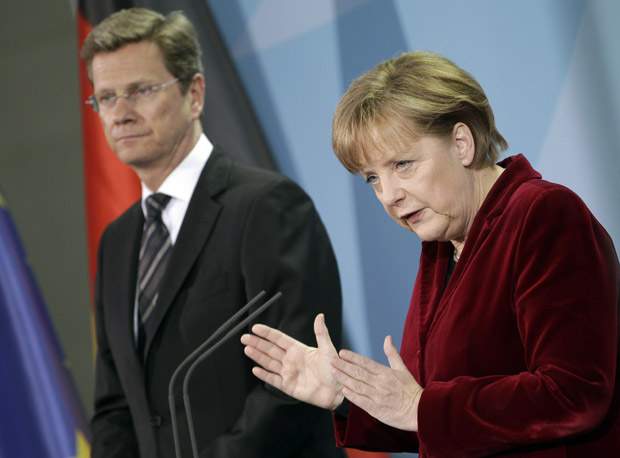
German Chancellor Angela Merkel said a decision last year to extend the life of the country’s 17 nuclear power stations would be suspended for three months.
France:
France’s prime minister has ordered safety checks of all the country’s 58 nuclear reactors after Japan’s tsunami-related nuclear troubles.
Francois Fillon says France should determine the plants’ capacity to resist earthquakes or floods, and use the information from the checks "to reinforce security" at atomic reactors.
Russia:
Russian Prime Minister Vladimir Putin said his government won’t revise its ambitious program of building new nuclear reactors but will "draw conclusions from what’s going on in Japan," according to Russian news agencies.
Nuclear power currently accounts for 16 per cent of Russia’s electricity generation, and the Kremlin has set a target to raise its share to one-quarter by 2030. Russia would have to build a total of 40 new reactors to fulfill the goal.
Poland:
Poland’s Prime Minister Donald Tusk said the country would stick to its plans to build two nuclear power plants and have the first one running by 2022.
Austria:
Nuclear-free Austria has asked the EU for stress tests on nuclear plants.
Europe and nuclear power:
As of January, there were 195 nuclear power plants operating in Europe and 19 under construction – 11 in Russia, two each in Bulgaria, Slovakia and Ukraine, and one each in Finland and France, according to the Brussels-based European Nuclear Society.
German popular opinion continues to favour non-nuclear sources of energy. But elsewhere in Europe, people have become increasingly open to using nuclear power as memories fade of the accident 25 years ago at the Soviet-built reactor in Chornobyl, Ukraine. Eastern Europe sees it as a way of gaining a measure of independence from Russia’s burgeoning gas and oil empire.
With files from The Associated Press



Comments
Want to discuss? Please read our Commenting Policy first.