

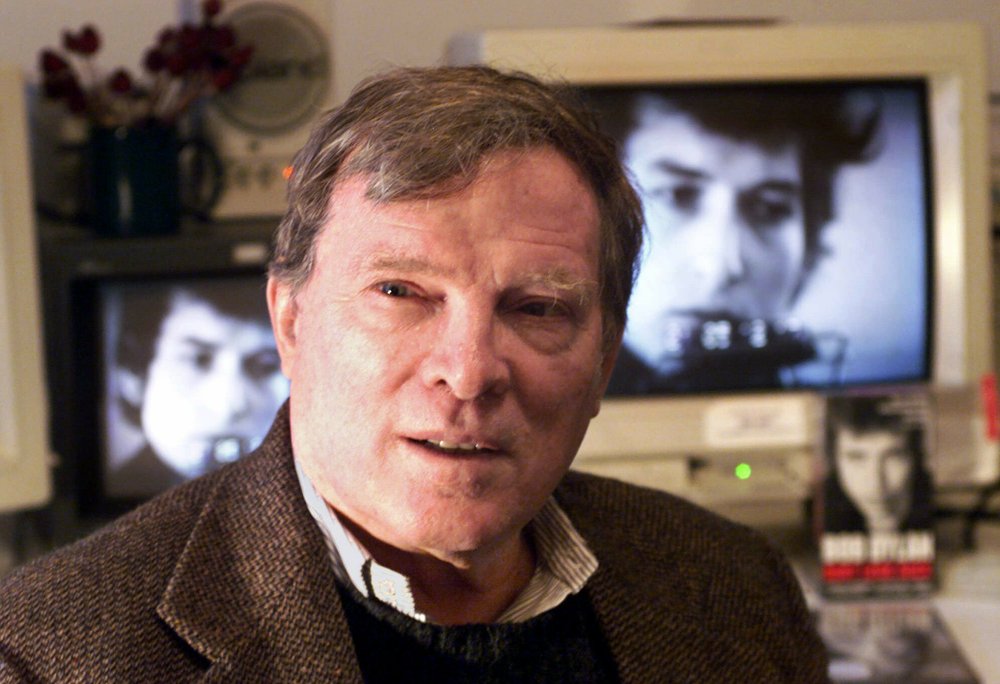
D.A. Pennebaker, the Oscar-winning documentary maker whose historic contributions to American culture and politics included immortalizing a young Bob Dylan in “Don’t Look Back” and capturing the spin behind Bill Clinton’s 1992 presidential campaign in “The War Room,” has died. He was 94.

Pennebaker, who received an honorary Academy Award in 2013, died Thursday of natural causes at his home in Long Island, his son, Frazer Pennebaker said in an email.
![Click to play video: 'Legendary comic actor Tim Conway dead at 85']() Widely admired and emulated, Pennebaker was blessed with patience, sympathy, curiosity, the journalist’s art of setting his subjects at ease, the novelist’s knack for finding the revealing detail and the photographer’s eye for compelling faces and images. When reducing vast amounts of raw footage into a finished film, Pennebaker said, “The one barometer I believe in is boredom. The minute people start to lose interest, that’s it.”Pennebaker parted from Drew in the mid-’60s and became a top filmmaker in his own right with the 1967 release “Don’t Look Back,” among the first rock documentaries to receive serious critical attention. It follows Dylan on a 1965 tour of England, featuring Joan Baez, Donovan, Allen Ginsberg and others.
Widely admired and emulated, Pennebaker was blessed with patience, sympathy, curiosity, the journalist’s art of setting his subjects at ease, the novelist’s knack for finding the revealing detail and the photographer’s eye for compelling faces and images. When reducing vast amounts of raw footage into a finished film, Pennebaker said, “The one barometer I believe in is boredom. The minute people start to lose interest, that’s it.”Pennebaker parted from Drew in the mid-’60s and became a top filmmaker in his own right with the 1967 release “Don’t Look Back,” among the first rock documentaries to receive serious critical attention. It follows Dylan on a 1965 tour of England, featuring Joan Baez, Donovan, Allen Ginsberg and others.
![Click to play video: 'Doris Day dead: Legendary actor, singer dies at age 97']() In a 2000 Associated Press interview, Pennebaker said he didn’t know much about Dylan at the time, but watching through his lens, saw “an amazing prodigy. Very smart in an untutored way. He created his own persona right before your eyes. … He was a compendium of things it takes professors years to figure out — startlingly naive, but smart.” He recalled Dylan “went into shock” the first time he saw the film, but then returned a night later, watched it again, then gave his OK.“He had no idea that one camera sitting on one guy’s shoulder could make him feel so naked. … I’ve always admired Dylan for letting (the film) go the way it was,” he said.Pennebaker continued to work with Dylan after “Don’t Look Back” and was on hand for his raucous European tour in 1966. An all-out rocker by this time, backed by expert and unknown musicians who later became the Band, Dylan performed snarling, defiant versions of “Like a Rolling Stone” and “Just Like Tom Thumb’s Blues” as fans of his folk style booed and heckled.Dylan was also seen working on music with Johnny Cash, and, looking and sounding strung out, bantering nonsensically with John Lennon in the back of a car in London. But Dylan was reportedly unsatisfied with Pennebaker’s cut and reworked the film himself. Some of the footage was released as “Eat the Document” while other parts were used by Martin Scorsese for “No Direction Home,” a Dylan PBS documentary released in 2006.
In a 2000 Associated Press interview, Pennebaker said he didn’t know much about Dylan at the time, but watching through his lens, saw “an amazing prodigy. Very smart in an untutored way. He created his own persona right before your eyes. … He was a compendium of things it takes professors years to figure out — startlingly naive, but smart.” He recalled Dylan “went into shock” the first time he saw the film, but then returned a night later, watched it again, then gave his OK.“He had no idea that one camera sitting on one guy’s shoulder could make him feel so naked. … I’ve always admired Dylan for letting (the film) go the way it was,” he said.Pennebaker continued to work with Dylan after “Don’t Look Back” and was on hand for his raucous European tour in 1966. An all-out rocker by this time, backed by expert and unknown musicians who later became the Band, Dylan performed snarling, defiant versions of “Like a Rolling Stone” and “Just Like Tom Thumb’s Blues” as fans of his folk style booed and heckled.Dylan was also seen working on music with Johnny Cash, and, looking and sounding strung out, bantering nonsensically with John Lennon in the back of a car in London. But Dylan was reportedly unsatisfied with Pennebaker’s cut and reworked the film himself. Some of the footage was released as “Eat the Document” while other parts were used by Martin Scorsese for “No Direction Home,” a Dylan PBS documentary released in 2006.
![Click to play video: 'Peter Mayhew, who played Chewbacca in ‘Star Wars,’ dead at 74: family statement']() The film blended raw, ruthless moments such as Stephanopoulos’ threatening a phone caller who claimed to have evidence of Clinton’s adultery and high emotion.“Carville, the general, gives a tearful farewell to his troops at the conclusion that is as powerful as any fictional scene that could have been scripted,” Associated Press writer Linda Deutsch wrote in her 1993 review of the Oscar-nominated movie. In 2008, some of the key members of Clinton’s team were interviewed for “Return of the Room,” a look at how campaigns had changed since the first Clinton presidential run.
The film blended raw, ruthless moments such as Stephanopoulos’ threatening a phone caller who claimed to have evidence of Clinton’s adultery and high emotion.“Carville, the general, gives a tearful farewell to his troops at the conclusion that is as powerful as any fictional scene that could have been scripted,” Associated Press writer Linda Deutsch wrote in her 1993 review of the Oscar-nominated movie. In 2008, some of the key members of Clinton’s team were interviewed for “Return of the Room,” a look at how campaigns had changed since the first Clinton presidential run.
![Click to play video: 'Actor Luke Perry dead at 52']() By the late ’50s, he had formed Drew Associates with Drew and Richard Leacock and begun work on a series of landmark movies, from “Primary” to “Crisis,” about the 1963 standoff between the Kennedy administration and Alabama Governor George Wallace, who was resisting integration at the University of Alabama. Pennebaker would criticize Drew’s editing of “Crisis,” saying he made it too worshipful of President Kennedy, and cited that as a reason for making films on his own.“I wanted always to have that control,” he told Film Comment in 2017, when he recalled meeting Dylan’s manager, Albert Grossman, and being asked to make a documentary.“He didn’t know me very well. We never met before he came to the office. But he could sense that about me, how I wanted to control my work. I wanted to tell my own story. So when Albert came and asked me would I want to go England with Dylan and make a film, film him, I was ready.”
By the late ’50s, he had formed Drew Associates with Drew and Richard Leacock and begun work on a series of landmark movies, from “Primary” to “Crisis,” about the 1963 standoff between the Kennedy administration and Alabama Governor George Wallace, who was resisting integration at the University of Alabama. Pennebaker would criticize Drew’s editing of “Crisis,” saying he made it too worshipful of President Kennedy, and cited that as a reason for making films on his own.“I wanted always to have that control,” he told Film Comment in 2017, when he recalled meeting Dylan’s manager, Albert Grossman, and being asked to make a documentary.“He didn’t know me very well. We never met before he came to the office. But he could sense that about me, how I wanted to control my work. I wanted to tell my own story. So when Albert came and asked me would I want to go England with Dylan and make a film, film him, I was ready.”
READ MORE: Ross Perot, billionaire and philanthropist, dead at age 89
Pennebaker was a leader among a generation of filmmakers in the 1960s who took advantage of such innovations as Academy Award handheld cameras and adopted an intimate, spontaneous style known as cinéma vérité. As an assistant to pioneer Robert Drew, Pennebaker helped invent the modern political documentary, “Primary,” a revelatory account of John F. Kennedy’s 1960 victory in Wisconsin over fellow Democratic presidential candidate Hubert Humphrey. He on went to make or assist on dozens of films, from an early look at Jane Fonda to an Emmy-nominated portrait of Elaine Stritch to a documentary about a contentious debate between Norman Mailer and a panel of feminists (“Town Bloody Hall”).WATCH: Legendary comic actor Tim Conway dead at 85
READ MORE: Emmy Award-winning actor Rip Torn dead at 88
Dylan was then transforming from folk singer to rock ’n roller and “Don’t Look Back” finds the artist clashing with journalists and breaking from his own history, including Baez, with whom he had comprised folk music’s signature couple. She was his girlfriend at the start of the movie and ex-girlfriend by the time the documentary was done, his growing disregard for her unfolding on camera. Decades later, he would apologize, saying he feared she would be “swept up in the madness” of his changing career.Scenes from “Don’t Look Back” have become part of the musical and movie canon, among them Dylan playing “It’s All Over Now, Baby Blue” in his hotel room while an impressed (and perhaps intimidated) Donovan looked on. In a much imitated sequence that anticipated rock videos, Dylan’s fast-talking “Subterranean Homesick Blues” plays on the soundtrack as the singer holds a stack of cue cards with fragments of the lyrics, peeling the cards off and discarding them one by one.Patti Smith would recall seeing the film so many times she memorized the dialogue.WATCH: Doris Day dead: Legendary actor, singer dies at age 97
READ MORE: Disney Channel star Cameron Boyce dead at age 20
After Dylan, Pennebaker again recorded a musical landmark with “Monterey Pop,” a documentary of the 1967 California gathering that was rock’s first major festival and featured such current and future stars as Otis Redding, Jimi Hendrix and Janis Joplin. Pennebaker not only captured some of the rock era’s most dynamic performances but the crowds who took them in, including a close-up of an awed Mama Cass during Joplin’s explosive “Ball and Chain.”Pennebaker also made a documentary about a 1969 concert in Toronto with John Lennon and a pickup band featuring Eric Clapton. He made films about performers he admired and some he came to enjoy, like Depeche Mode, whose dedicated fans warmed him to their music.In the 1990s, Pennebaker returned to politics with “The War Room,” co-directed by Pennebaker and his wife, Chris Hegedus. This time, the stars weren’t the candidates, but those behind the scenes. The filmmakers were granted limited access to Clinton, so the documentary focused on the campaign headquarters in Little Rock, Arkansas, as political strategists and future media stars James Carville and George Stephanopoulos guide the young Arkansas governor’s march to the White House.WATCH: Peter Mayhew, who played Chewbacca in ‘Star Wars,’ dead at 74: family statement
READ MORE: Actress Lisa Sheridan dead at 44: reports
Pennebaker’s later films were made in partnership with Hegedus, whom he married in 1982.Pennebaker was a longtime resident of Sag Harbor, an oceanside community on the eastern end of Long Island.Donn Alan Pennebaker, whose father was a commercial photographer, was born in 1925 in Evanston, Illinois. He earned a degree in mechanical engineering at Yale University before going into filmmaking and used his college skills to help develop portable camera equipment used in documentaries and to design a computerized airport reservation system. He completed his first short, “Daybreak Express,” in 1953, combining a pulsing Duke Ellington score with a jazzy, shadowy montage of an elevated New York City subway station and its passengers. He also wrote and painted and worked briefly in advertising.WATCH: Actor Luke Perry dead at 52


Comments
Want to discuss? Please read our Commenting Policy first.