


You have the privilege to meet so many people with extraordinary stories as a reporter, but there are always those special few who touch you more than the others. Twenty-year-old Ibrahim Bangura is just such a person.

He is known in Freetown, Sierra Leone as “di bag man.” He hits the streets daily, selling African cloth bags he and his grandfather make at home. He makes a living at this, but just barely. He has little other choice though. You see, Ibrahim has no hands.
Ibrahim was just nine years old when in the midst of the civil war in Sierra Leone, rebels swept into his village. They grabbed the scared little boy and tied his hands together.
What followed defies the imagination. Ibrahim says the rebels first burnt his hands, then chopped them off. It’s something he doesn’t like to talk about, and only does so reluctantly. It is horrible and makes him feel like crying, he says with his head hanging low, eyes cast down.
He can’t go into any more detail, it is simply too much. He recalls escaping and being helped by the Red Cross. Life after that, though, was almost impossible. There was no way to make a living, Ibrahim and his family were begging in the streets. Finally his grandfather, who is a tailor, moved them into the city.

Get breaking National news
Now he and his grandfather work closely together. They depend on each other for survival. Daniel Williams bends over an old sewing machine, Ibrahim at his side. He is painstaking in his work, making sure every seam on the simple bags he makes is just so.
Ibrahim helps trim the lose threads and expertly turns the bags outside in, so that the seams are on the inside. Then he hangs each one carefully on a clothes line, surveying their work. He can only hope the bright patterns will attract some shoppers today, otherwise he will have nothing to eat and no way to even start to pay the rent.
It’s up to him to sell. His grandfather can’t get around very easily. He is also an amputee. Two years ago, he lost one of his legs due to diabetes. He sews. Ibrahim sells. This is all they have.
Ibrahim says it isn’t easy coming and going, selling on the street, rushing out to get the material. He says life on the street is difficult – it’s all about survival.
He believes only God is helping him and he has to trust his faith. Ibrahim also says the government does nothing to help. “I lost my hands during the war, now I am nothing” are his words. He wants to “be somebody,” he says. All he wants is a little shop where they can set up and sell their products properly, and make a real living.
Although he tries to hold on to hope, Ibrahim reveals that things are so difficult at times, he even feels like committing suicide because he is suffering so much.
This is the part of the story, where as a journalist, you want to talk about how it looks like things will get easier for Ibrahim, that his modest dreams will come true. Sadly, that is not how this story goes. We leave Ibrahim a desperate young man, unsure where to turn, hoping perhaps someone in the international community will hear his pleas for help and offer assistance.
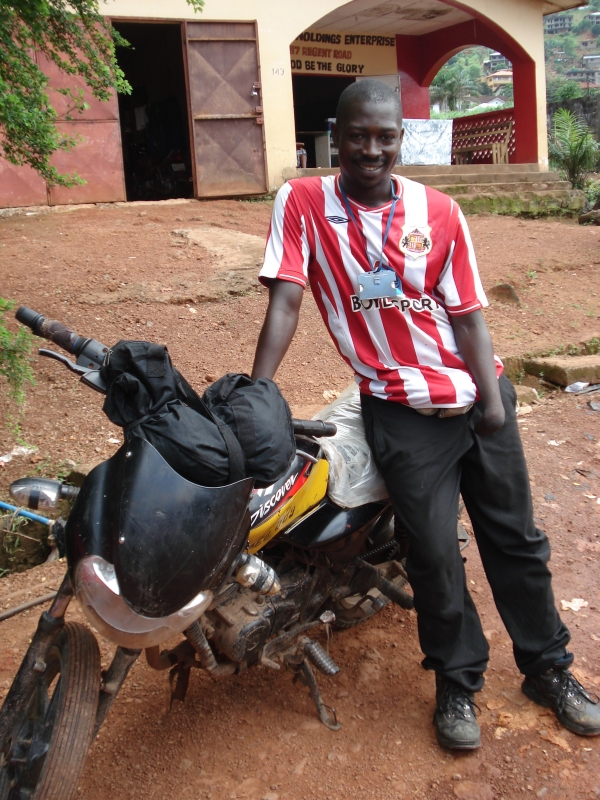
As we part, Ibrahim heads out with his bags. He gets on an old, battered motorbike, which he has mastered riding despite his disability. He drives a couple hundred metres down the street, then turns around and rides back toward us.
For a few seconds, he lets go of the handles and holds his arms straight out to his sides, like a carefree child riding a bicycle in the wind. I’m not sure what the gesture means, but I hope that at least on his motorbike, he has a few moments of freedom from his troubles.
Maybe there is a little bit of child left that wasn’t entirely destroyed when he was nine.
Christina is a Global National correspondent based in Toronto. She is currently reporting from Freetown. Follow her on Twitter: @StevensGlobal.


Comments
Want to discuss? Please read our Commenting Policy first.