


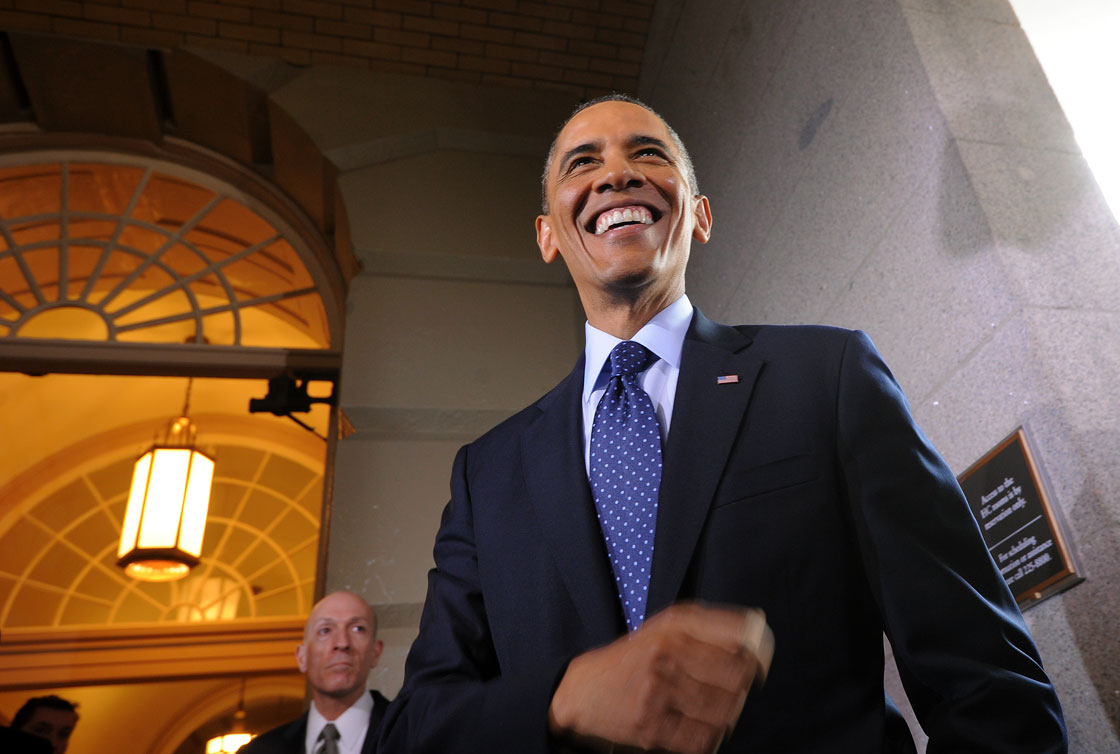
TORONTO – U.S. President Barack Obama put a 21st century spin on Franklin D. Roosevelt’s fireside conversations after hosting a Google+ “Fireside Hangout” to answer questions about his State of the Union address.

Obama answered questions submitted through The White House YouTube channel, where users voted for their favourite questions.
One of the top-voted questions, submitted by an anonymous user, asks the president to address Internet privacy, particularly when it comes to bills SOPA and CISPA.
“Mr. President, I’m concerned about Internet privacy. Bills like SOPA and CISPA seek to cure legitimate problems through woefully incorrect, detrimental means. How can we best protect intellectual property without using invasive methods,” reads the question.
Obama announced a long-awaited executive order on cybersecurity during his State of the Union address.
The order allows federal agencies to notify private companies if there is any detection of cyber intrusions that would harm operations, or jeopardize data security.
Although the order was well-received by civil liberties groups, many are still worried about the controversial Cyber Intelligent Sharing and Information Act (CISPA) bill that was reintroduced to the House on Wednesday.

Get daily National news
CISPA is backed by big-name technology companies like Google and Facebook, who say it would help to strengthen their defense against cyber-attacks. But Internet advocacy groups argue that CISPA’s wording is so broad that it may allow these tech companies to intercept users’ messages and data and relay them to the government.
Though Obama did not answer a specific question regarding SOPA or CISPA, he did touch on copyright and piracy issues when answering a question regarding patent reform.
“The technology is changing so fast – we want to protect privacy, we want to protect people’s civil liberties, and we want to make sure the Internet stays open,” said Obama during the Google+ Fireside Hangout.


“I am an ardent believer that what’s powerful about the Internet is its openness and the capacity for people to get out there and introduce a new idea with low barriers to entry. We also want to make sure that people’s intellectual property is protected. Whether it’s how we’re dealing with copyright, how we’re dealing with patents, how we’re dealing with piracy issues – what we’ve tried to do is be an honest broker between the various stakeholders and to continue to refine it, hopefully keeping up with the technology which doesn’t mean that they’re aren’t occasionally going to be some problems that we haven’t identified and have to keep working on.”
The POTUS also touched on the importance of engaging young people with computers in schools.
When asked if it could be a national education effort to teach computer programming to high school students Obama said, “I think it makes sense, I really do.” Obama noted that his administration is working with school districts to make school relevant for young people and said teaching vocational technology skills engages kids.
“Given how pervasive computers and the Internet is now and how fascinated kids are with it, I want to make sure they know how to actually produce stuff using computers and not simply consume stuff,” said Obama.
Follow Nicole Bogart on Twitter: www.twitter.com/nlynnbogart
Comments
Want to discuss? Please read our Commenting Policy first.