

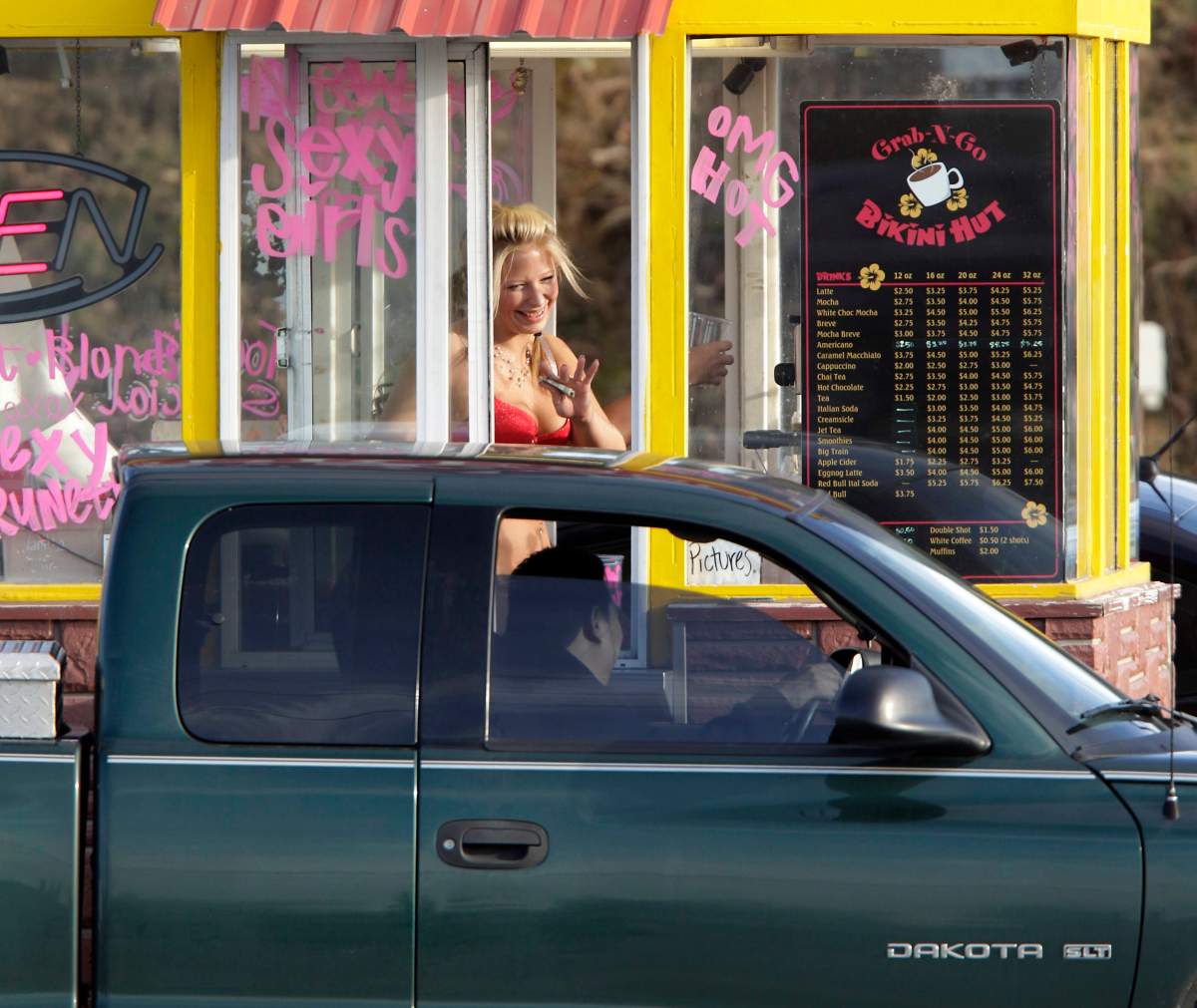
Seven bikini baristas and the owner of a chain of the coffee stands called “Hillbilly Hotties” sued the city of Everett, Washington, on Monday, saying two recently passed ordinances banning bare skin violate their right to free expression.

The suit, filed in U.S. District Court in Seattle, says the ordinances passed by the Everett City Council deny bikini-stand employees the ability to communicate through their attire, are vague and confusing, and unlawfully target women.
“Just like Starbucks with green aprons, UPS with brown trucks and outfits, and Hooter’s with short-orange shorts, the baristas’ attire evokes a message at work,” the lawsuit says, adding that such messages include “freedom, empowerment, openness, acceptance, approachability, vulnerability and individuality.”
One of Everett’s new laws requires the workers to wear a minimum of tank tops and shorts. It specifically applies to employees at “quick service” restaurants, which also include fast food and food trucks.
WATCH: A Muslim Miss Universe contestant fought for her right to wear a kaftan instead of a bikini

The other redefined the city’s lewd conduct ordinance and created a new crime of facilitating lewd conduct. Both ordinances took effect early this month.

Get weekly money news
The city cited “a proliferation of crimes of a sexual nature occurring at bikini barista stands throughout the city” in adopting the measures.
“Employees and owners of barista stands where this conduct occurs are making large sums of money from overtly sexual, lewd conduct, and prostitution,” the city declared in one of the measures.
A spokeswoman said the city had no comment on the lawsuit.
Everett and Snohomish County, where it’s located north of Seattle, have had a troubled history with the shops, which in some cases have operated as drive-thru strip clubs or even brothels. A former Snohomish County sheriff’s sergeant pleaded guilty to helping launder money from a prostitution operation run out of some of roadside stands and was sentenced to one year in jail.
The proprietor of another chain, the Grab-N-Go espresso huts, was convicted of sexual exploitation of a minor after he employed a 16-year-old girl at his stands. Prosecutors said his business model relied on the baristas performing lewd shows.
WATCH: Operators of Czech nuclear power plant apologize for bikini contest to choose new intern


But Jovanna Edge, who runs five Hillbilly Hotties stands, including two in Everett, said the city’s new laws are unnecessary. A few years ago, she said, she gave Everett police permission to log in and view surveillance video of her stands so they can observe what’s happening in real time.
“I don’t want to hide anything from them,” Edge said Monday. “Everybody needs to follow the rules, to not step out of the box and take their clothes off for people. That’s a way to keep them honest.”
Since the laws took effect, she said, “I have people who are threatening to quit because they’re not making any money.”
READ MORE: Moms of #IMOMSOHARD fame post hilarious video about swimsuit season — the internet is loving it
Among the allegations in the lawsuit is that the laws’ definitions of what skin must be covered up are confusing. The dress code for baristas refers to the “upper and lower body,” stomach, and back below the shoulder blades, among other areas.
“The length of a common woman’s shirt is often short enough that stretching or bending would reveal part of her back or stomach,” the lawsuit says.
The other measure bans “an exposure of more than one-half of the part of the female breast located below the top of the areola.”
“To properly enforce the citywide ordinance, a police officer must determine the location of the ‘top of a woman’s areola,’ which can only be seen by exposing the breast,” the complaint says. “This would subject women to humiliating and offensive searches.”


Comments
Want to discuss? Please read our Commenting Policy first.