


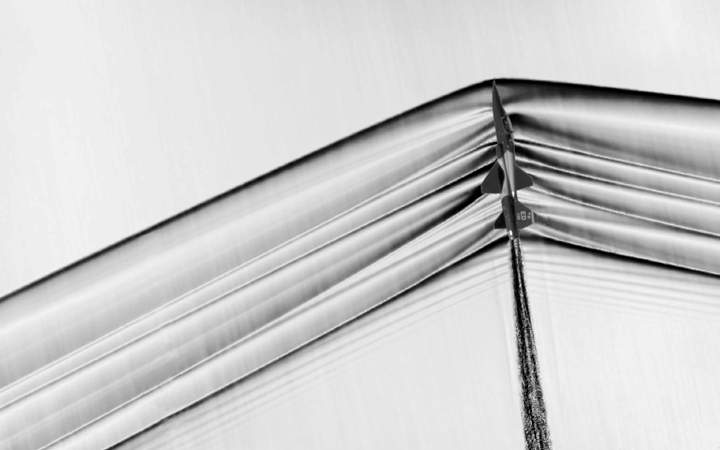
You’ve likely heard a jet screaming through the sky, but did you know that there’s a way to see that sound?

Okay, you’re not seeing the sound exactly, but you’re seeing the results of the sound: the shock wave it produces.
Finding out how jets affect the air around them is a combination of both old and new technology.
The supersonic jet’s shock wave was captured using a 150-year-old technique called Schlieren imaging. German physicist August Toepler developed the technique in 1864 to study supersonic motion.

Get daily National news
Shock waves are narrow areas of air where the temperature, pressure and density all change relative to the air around it and are produced when something moves faster than the speed of sound (1,236 km/h).
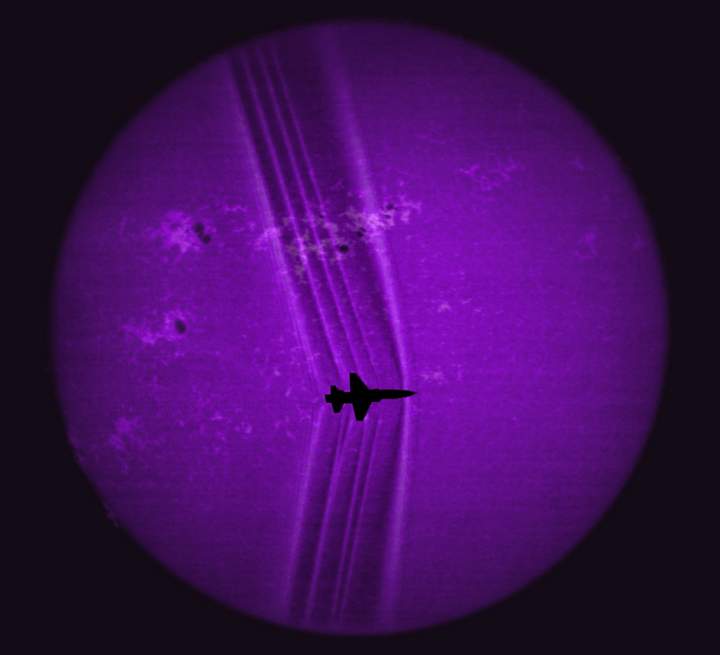


So this schlieren process has been used in aerodynamic test facilities or using the ground as a backdrop. But now scientists are looking to using the sun or moon as a backdrop, called the Background-Oriented Schlieren using Celestial Objects (BOSCO).
This new method shows more detail — not only shock waves, but also vortices and could help imaging the air flow around vehicles or even wind turbines.


Comments
Want to discuss? Please read our Commenting Policy first.