



TORONTO – Tragedy and uncertainty overshadowed the beginning
of a week of prestigious Nobel Prize announcements Monday.
Canadian-born scientist
Ralph Steinman was awarded the coveted prize for his discoveries about the
immune system, just three days after his death from pancreatic cancer on Friday.
The Nobel committee, apparently unaware of Steinman’s
untimely passing, announced Monday they will not rescind
the award despite Nobel statutes which do not permit posthumous awards.
The Nobel Prizes are the legacy of Swedish industrialist Alfred
Nobel, who invented dynamite in 1866. In his will, Nobel dedicated the bulk of
his vast estate to the annual awards honouring significant contributions to humanity in a
range of subjects.
Steinman’s medicine award was the first in a series of Nobel
Prize announcements anticipated this week. Awards for distinguished work in physics, chemistry and
literature will follow throughout the week.
The Nobel Peace Prize will be awarded on Friday. The winners
of the economics award will be announced on October 10.
The Nobel Prize awards ceremony will be held on December 10,
coinciding with the anniversary of Nobel’s death in 1896.

Get breaking National news
Several notable Canadians have received Nobel Prizes over
the years. Here are nine other outstanding Canadian winners:
Medicine
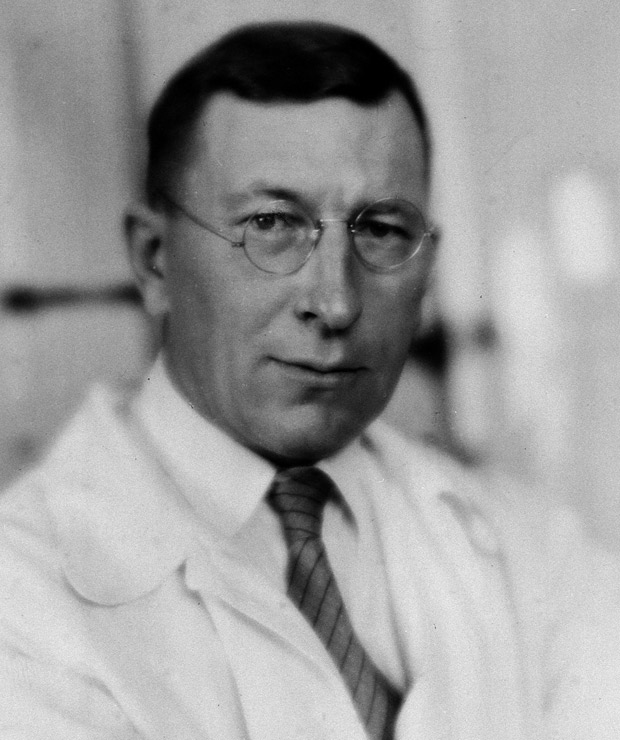
Perhaps the best known is Dr. Sir Frederick H. Banting, who received
the Nobel Prize in Medicine in 1923 for his invention of insulin as a way to
treat diabetes. Banting shared his honour with co-discoverer Dr. Charles Best.
Peace
Lester B. Pearson was Canada’s 14th prime minister
and the 1957 recipient of the Nobel Peace Prize for his efforts creating the
United Nations Emergency Force, which worked to end the Suez Canal Crisis in
1956.
Chemistry
John Polanyi, a German-born scientist raised in England, won
the Nobel Prize in 1986 for his work in chemical kinetics. Polanyi, alongside two
other chemical scientists, used infrared chemi-luminescence to measure energy
relationships in chemical reactions. He continues to teach chemistry at the University
of Toronto.
Physics
Winner of the 1994 Nobel Prize in Physics, Bertram
Brockhouse co-developed the Triple-Axis Neutron Spectroscope, a neutron scattering
technique. He shared his award with American physicist Clifford Shull.
-
![]() Gordie Howe International Bridge open delayed over ‘outstanding issues’
Gordie Howe International Bridge open delayed over ‘outstanding issues’ -
![]() ‘My daughter is gone’: Mother alleges ChatGPT failed her family, files lawsuit
‘My daughter is gone’: Mother alleges ChatGPT failed her family, files lawsuit -
![]() Toronto police officer dead after gunfire exchange during search warrant execution in North York
Toronto police officer dead after gunfire exchange during search warrant execution in North York -
![]() Grok AI broke Canada’s laws, created 6K sexual deepfakes per hour, privacy commissioner says
Grok AI broke Canada’s laws, created 6K sexual deepfakes per hour, privacy commissioner says


Physics
Richard E. Taylor made significant contributions to the
development of the quark model in particle physics. He was awarded the Nobel
Prize in Physics in 1990, sharing the honour with two American physicists who worked
with Taylor to verify the quark theory.
Literature
Saul Bellow, a Quebec-born Jewish-American writer, was
awarded the Nobel Prize in Literature in 1975, as well as the 1976 Pulitzer
Prize for Fiction, for his novel, Humboldt’s Ghost. The acclaimed work explored
the evolving relationship of art, success and power in mid-century America.
Economics
Robert Mundell received the Nobel Memorial Prize in
Economics in 1999 for his analysis of monetary and fiscal policy under varying
exchange rates, as well as his study of the optimum currency areas. Mundell is
a professor of economics at Columbia University in New York and the Chinese University
of Hong Kong.
Medicine
Canadian neurophysiologist David H. Hubel was awarded the
Nobel Prize in Physiology in 1981 for discoveries about the information processing
system of the central nervous system. He shared the honour with Torsten Wiesel,
a Swedish researcher who helped Hubel map the visual cortex, now the best known
part of the brain.
Physics
Willard S. Boyle won the Nobel Prize in Physics in 2009 for
his work with condensed matter. Boyle co-invented the charge-coupled device (CCD), a
sensor used for the movement of electrical charge. CCD technology is widely used
for digital imaging.


Comments
Want to discuss? Please read our Commenting Policy first.