

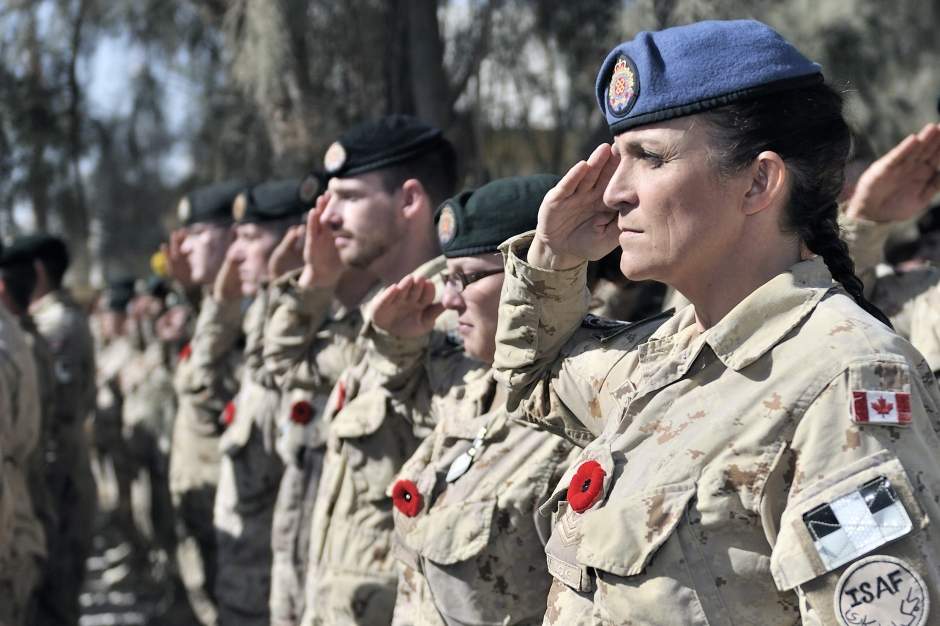
OTTAWA – It was a historic day in Afghanistan on Thursday as the Canadian Forces signed the papers to transfer command of Kandahar to the Americans, officially ending the five-year Canadian combat mission in the volatile province.
As they officially end their work, Canadian soldiers are feeling good about what they’ve accomplished, according to their top commander in Afghanistan.
“I think the troops are leaving on a high note,” said Brigadier-General Dean Milner, who took command of Joint Task Force Afghanistan in 2010. “I’m extremely proud of their accomplishments and also they are quite happy because they know in most cases they are days away from heading home, back to families, back to life back in Canada.”
Brig.-Gen Milner said the Canadians have accomplished what they came to the country to do.
“It has been a rewarding tour for the task force. One of our goals was to flatten the insurgency; that we did through some excellent work by the Van Doo battle group that was under my command,” he said.
He also lauded the work that the Canadians soldiers did to build the abilities of the Afghan National Army saying that the forces under Afghan Brig-Gen. Ahmad Habibi are “absolutely” capable of planning and exercising their own operations.
Milner said the troops have seen signs that the Afghan people are able to govern their own country and together have built much-need infrastructure including schools, roads and irrigation systems.
“We’ve given them a confidence they didn’t have before by flattening the insurgents’ capability by assisting with governance through a lot of hard work, some sacrifice, but again I’ve seen and we’ve seen some excellent momentum here now in the province,” said Milner.
The timing of the pullout was not based on these accomplishments, but by politicians three years in advance.
“We knew well ahead of time that this summer we would be transitioning. That gave us plenty of time to prepare for a solid, consolidation and preparing for the Americans to arrive on the ground.”
The hard-fought accomplishments come after nearly a decade of sacrifice by Canadians.
Since 2002, 157 Canadian soldiers, one diplomat and one journalist have died as a result of the Afghan mission.
Now it will be up to the Americans and the Afghans to ensure those sacrifices weren’t for naught.
The Canadian focus will turn to Kabul in the north, where 950 soldiers will spend the next three years training the Afghan military and police force – still a dangerous task for those involved.
“This country is still at war. There are a lot of challenges. The risks will be nowhere near what they were here in Kandahar inside the wire. There will always be a few risks because we are in a country that is still trying to fight the insurgents,” Milner said.
Planeloads of Canadians troops have already left the country and the rest will follow by the end of the month. The group will stop in Cypress to debrief in preparation for a return to life in Canada.
Five years in Kandahar has also empowered the Canadian army, Milner said.
“Arguably we are one of the better small armies in the world. We are very confident in our capabilities,” he said. “As you know the way the world is right now, we will be well-prepared to move wherever needed in the future.”



Comments
Want to discuss? Please read our Commenting Policy first.