


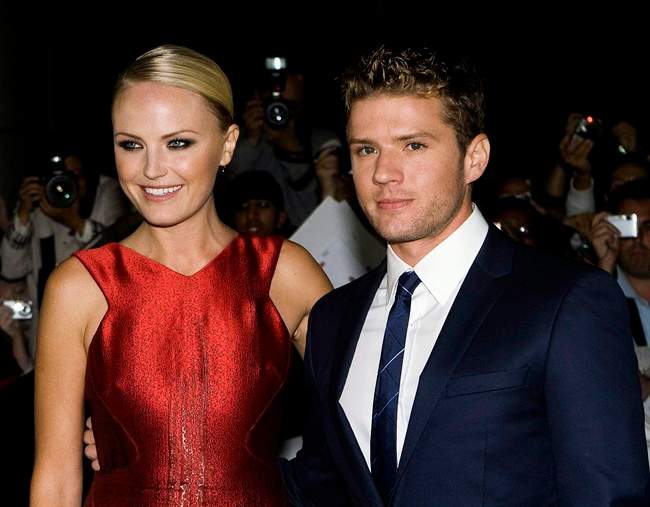
<p>TORONTO – Ryan Phillippe’s role in the new film “The Bang Bang Club,” about a group of photojournalists who captured the end of apartheid in South Africa, marks more than just another notch on the Hollywood heart-throb’s resume. It’s also had a big impact on him personally.</p> <p>”Spending the time in South Africa that I did had a huge effect on me,” Phillippe, 36, said in an interview at last September’s Toronto International Film Festival. </p> <p>”You feel for the people living in that kind of poverty, and particularly the children, when you’re a father like I am. But the place, the spirit of South Africa, definitely gets under your skin. It definitely affects you in a soulful way.</p> <p>”So as difficult as it was, I really did love being there and I really enjoyed it, and it’s a place I want to take my kids to.”</p> <p>Opening Friday in Toronto, Vancouver and Montreal (additional markets will be added later this month), “The Bang Bang Club” is a true story of four photographers who risked their lives to document the final bloody days of white rule in South Africa in the 1990s.</p> <p>Phillippe stars as Greg Marinovich, Kelowna, B.C., native Taylor Kitsch plays Kevin Carter, Frank Rautenbach plays Ken Oosterbroek and Neels Van Jaarsveld plays Joao Silva. Toronto-raised Malin Akerman plays Robin Comley, the photo editor for the group that came to be known as “The Bang Bang Club.”</p> <p>”I remember them from my coming of age in South Africa,” writer-director Steven Silver said before the film’s debut at TIFF. “I’m South African and I grew up there and for all that time I was an activist in the sort of anti-apartheid movement, so I remember these journalists from my youth.”</p> <p>The film is based on the book of the same name by Marinovich and Silva, who were both on set during shooting. Silver, who is primarily a documentary maker, said he optioned the film rights to the story when the book was just a manuscript.</p> <p>Silver wrote 21 drafts of the screenplay over a period of about eight years, wrestling with how to turn the true story into a dramatic narrative while sticking to the facts and creating something that audiences would want to watch. In the end, he focused on the characters and buried the politics, which he felt would come through naturally.</p> <p>”I don’t really see it as a particularly political film, oddly,” said Silver. “I think it’s a film about men in their 20s … grappling with those kinds of choices, you know, what is the right thing to do in this situation.”</p> <p>Said Rautenbach, a South African native: “No manual was written. These guys weren’t following somebody in understanding their world. They literally figured it out as they were going every day.”</p> <p>Phillippe, whose previous high-profile credits include “54” and “Cruel Intentions,” adopted a South African accent and learned some photojournalism skills onset. He also spent a lot of time with Marinovich, who won a Pulitzer for his photo of man who’d been savagely beaten and set on fire in one of the townships before the fall of apartheid.</p> <p>”That same photograph that brought him fame came out of someone else’s suffering, which I think is an interesting aspect of the movie where these guys are succeeding by virtue of other people’s misery in some ways,” said Phillippe.</p> <p>”I think at that time they realized the power of what they were doing, the fact that the photograph that Greg took brought a ton of attention and awareness to what was going on in the townships that most of the white world didn’t know about at all. Even people in South Africa were unaware; it was being hidden from them essentially by the apartheid government.”</p> <p>The Canada/South Africa co-production was filmed over a year ago in Johannesburg and its surrounding townships. Shooting six days a week in some of the poorest parts of the world was “difficult” but rewarding as they found hope and inspiration in the people, said Phillippe.</p> <p>”We would shoot in the townships, like Soweto and Thokoza, and a lot of the kids there don’t go to school so they’d be around set and hang out with us and they’d want to know about our lives and what it was like being in America and being in the movies,” said the Delaware native, who has two children with ex-wife Reese Witherspoon.</p> <p>”There were a lot of sort of intimate moments we had with people who live there.”</p>



Comments
Want to discuss? Please read our Commenting Policy first.