

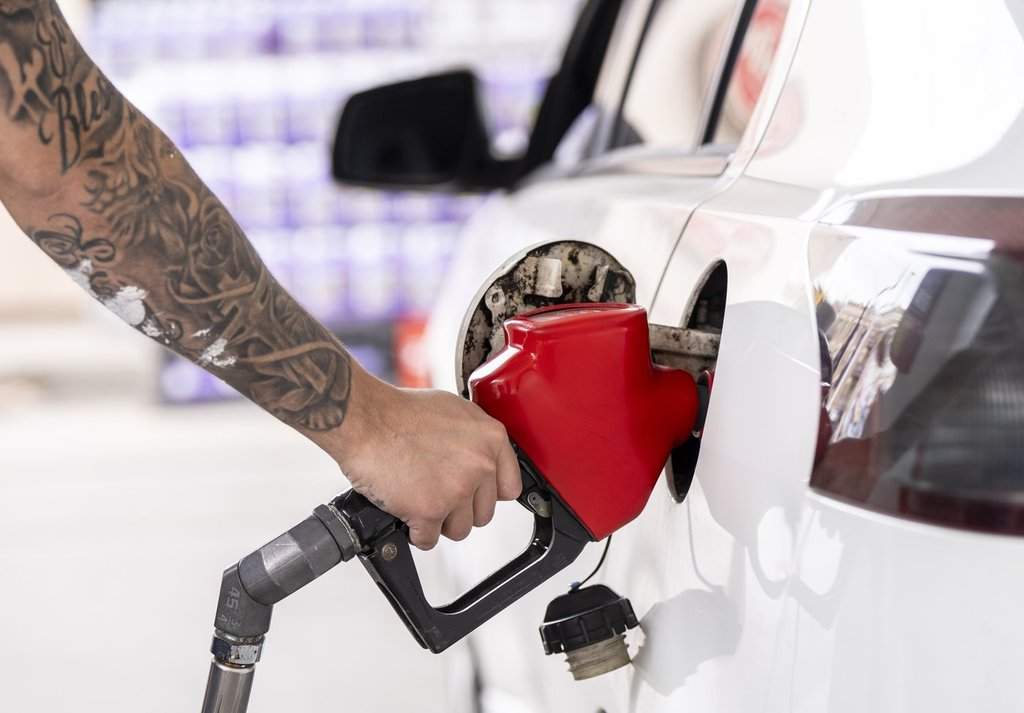
OTTAWA – High oil and gasoline prices are expected to push inflation higher when Statistics Canada reports its consumer price index for May on Monday.

But the devil will be in the details as economists look for any signs that the cost at the gas pump is causing inflation to heat up elsewhere in the economy.
TD Bank senior economist Andrew Hencic says gasoline prices rose in May, so that will push inflation higher for the month, but oil prices have since come off their highs in recent days.
The price of oil fell after the U.S. and Iran struck a memorandum of understanding to bring the war to an end and reopen the Strait of Hormuz to tanker traffic.
The two sides must now hammer out terms for a final agreement to end the fighting, including details about the future of Iran’s nuclear program.
So more important than the overall inflation rate, Hencic said he will be looking to see what prices are doing beyond gasoline in the report Monday.

-
![]() BC election costed platforms
BC election costed platforms -
![]() Unifor members rally to protect Canadian jobs outside the Legislature
Unifor members rally to protect Canadian jobs outside the Legislature -
![]() Reaction to referendum continues during Small Business Week in Calgary
Reaction to referendum continues during Small Business Week in Calgary -
![]() ‘Protect Canadian Jobs’ rally at the B.C. legislature
‘Protect Canadian Jobs’ rally at the B.C. legislature -
![]() Consumer Matters: Food affordability remains top concern across Canada
Consumer Matters: Food affordability remains top concern across Canada -
![]() Calgary mall announces new anchor tenant
Calgary mall announces new anchor tenant -
![]() Alberta to ‘proceed with caution’ on immigration referendum questions
Alberta to ‘proceed with caution’ on immigration referendum questions -
![]() Canadians relying on food banks now more than ever: report
Canadians relying on food banks now more than ever: report -
![]() Carney, Ford unveil $9B plan to support industries hit by Trump’s tariff war
Carney, Ford unveil $9B plan to support industries hit by Trump’s tariff war -
![]() Alberta referendum’s impact on province’s business community
Alberta referendum’s impact on province’s business community


“Everybody’s gone to the gas station and saw the price when they went to fill up the tank. But it’s more than just that,” he said.

Get daily National news
“If those core measures continue to be well-behaved, then we don’t see a significant pickup in inflation across a broader set of goods and services. That’s really what we’re looking for.”
Statistics Canada reported the annual inflation rate was 2.8 per cent in April, up from 2.4 per cent in March, driven by a 19.2 per cent year-over-year jump in energy prices. Excluding gas prices, the consumer price index was up two per cent in April.
The consensus among economists is that the annual inflation rate rose to three per cent in May, according to LSEG Data & Analytics.
The Bank of Canada, which has a two per cent target for inflation, has said there has been limited evidence of a broad-based pass-through of higher energy prices to the cost of other things so far.


In releasing its decision to hold its policy interest rate at 2.25 per cent earlier this month, the central bank said it was continuing to look through the impact of the war in the Middle East, but noted it will not let higher energy prices become persistent inflation.
RBC economist Abbey Xu says the central bank’s preferred measures of core inflation are sitting at about two per cent.
“The more important question is whether higher energy costs start spreading through the rest of the consumer basket and so far, our expectation is that underlying inflation remains considerably more subdued than the headline numbers suggest,” Xu said.
RBC is forecasting inflation to rise to three per cent for May year-over-year.
Xu says she will be scrutinizing the report on Monday for any signs that higher energy prices are spilling over to other categories.
“Our expectation is still that the uptick in headline inflation is still driven by limited categories, especially the energy component. And that so far, we’re not seeing a lot of pass-throughs,” Xu said.
The inflation report comes as economists look for signs of a rebound in the economy in the second quarter after a weak start to the year. The Canadian economy contracted 0.1 per cent on an annualized basis for the first three months of the year.
The Bank of Canada’s next interest rate decision is set for July 15 when it will also release its latest monetary policy report which will include its forecasts for the economy.
This report by The Canadian Press was first published June 20, 2026.


Thank you for fixing the headline. Now, let’s all acknowledge that inflation is going to be Carney’s justification for alleging the economy is “now on track”.
And thats a comment for stupid people to chew on.
Actually, gas prices are coming down. They are 1.56 here. But yes the price of food is still rising along with everything else. The grocery nabobs and barons just dont seem to get the message. Neither do the Liberals and their little fascist toothless terrier they have illegiley installed as PM.
Canada needs to get rid of these cowards and go after the nabobs. F*ck the government, they wont do anything. Bunch of cowards. Time to burn the bastards out.
SAME BULL S H I T OVER AND OVER
In other words they can’t hide the fact that inflation is getting higher. Carney and this Liberal governments answer is to put a 10% tariff on canned vegetables. Talk about being out of touch with the struggle Canadians are facing every month.
Carney has added more cost to fuel in Canada. About 15c / litre for the clean fuel standard.
Meanwhile… Trump has threatened to impose tolls on the Strait of Hormuz .
He just signed an agreement with Iran that they would not charge tolls. The man needs to be put into a home for the aged and senile.
And Carney is trying to sell India and others our oil and natural gas, but refuses to do anything to promote the pipeline needed to the west coast, or one to the Maritimes for Europe sales.No telling the natives that they have no say, and no telling BC that their tanker ban is illegal (oceans are federal)
No, Mark Carney is pushing inflation higher.
I judge people by their current actions, not their pedigree.
But, the war is over. The gas prices should come down now…thats what we were led to believe by media. Somehow the oily barons haven’t figured out how to lower prices as quick as what they go up. I think greed may have gotten I the ay of being fair and just. Stock market manipulation running rampant and turning those paltry millionaires into billionaires. All racing to be Musk.
The only way this stops is if those money grubbers are burned out.
So, let’s see if this logic tracks: when world events cause increased energy prices, Canadians struggle with the cost of living….however, when woketard environmental cultists increase the cost of energy by implementing gas taxes and restrictive energy policy there is absolutely no negative effect on the economy…
Only the most brainwashed liberal voter sees these two things as simultaneous truth.