

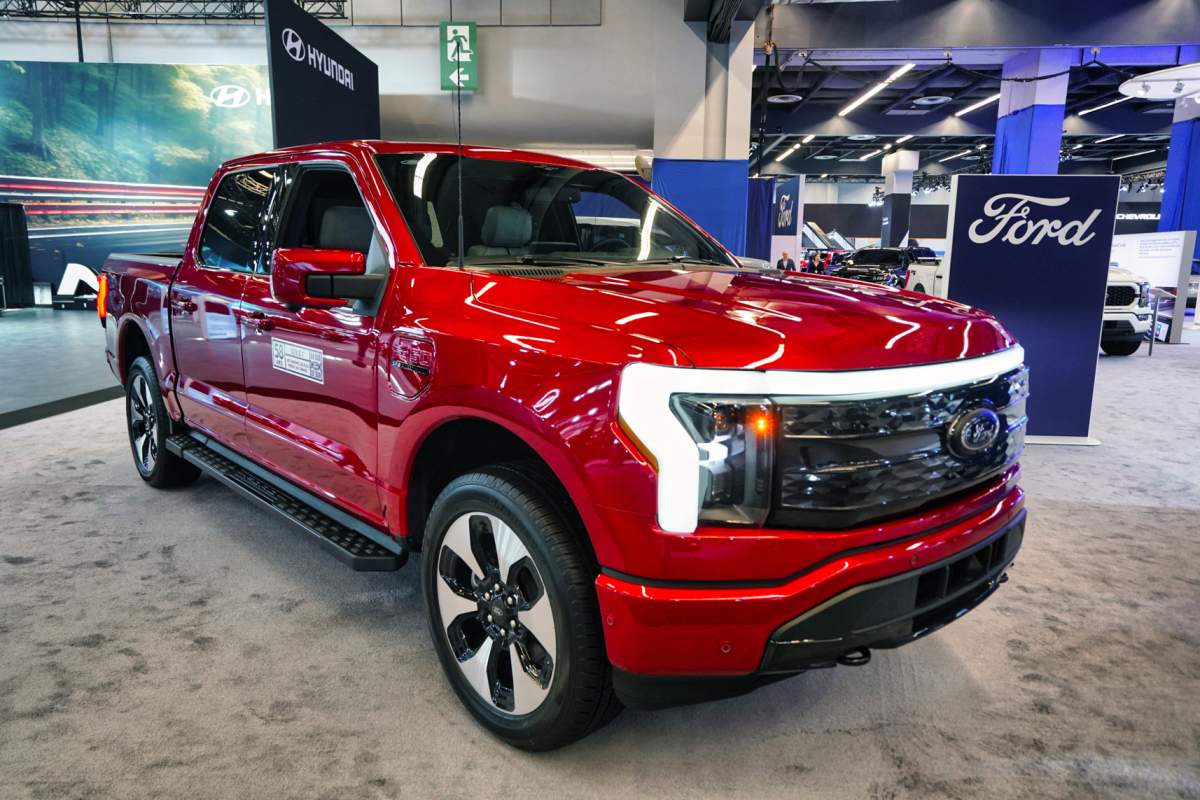
Ford Motor Co. is pivoting away from its once-ambitious electric vehicle plans amid financial losses and waning consumer demand for the vehicles in lieu of investment in more efficient gasoline engines and hybrid EVs, the company said Monday.

The Detroit automaker, which has poured billions of dollars into electrification along with most of its industry peers, said it will no longer make the F-150 Lightning electric pickup truck, instead opting for an extended-range version of the vehicle.
Ford will also introduce some manufacturing changes; its Tennessee Electric Vehicle Center — part of the BlueOval City campus and once the future of Ford’s EVs and batteries — is being renamed the Tennessee Truck Plant and will produce new affordable gas-powered trucks instead. Ford’s Ohio Assembly Plant will produce a new gas and hybrid van.

The company has lost US$13 billion on EVs since 2023 and said it expects to take a $19.5-billion hit largely in the fourth quarter due to the EV business.
“This is a customer-driven shift to create a stronger, more resilient and more profitable Ford,” CEO Jim Farley said in a statement. “The operating reality has changed, and we are redeploying capital into higher-return growth opportunities: Ford Pro, our market-leading trucks and vans, hybrids and high-margin opportunities like our new battery energy storage business.”

Get daily National news
Ford said it now expects half of its global volume will be hybrids, extended-range EVs — which also incorporate a gasoline-powered engine — and full EVs by 2030, up from 17 per cent this year.
“Ford’s elimination of the electric F-150 Lightning is not much of a surprise after the truck failed to come close to filling the plant’s capacity. Ford’s choice to convert an existing gas-powered truck to accept the electric drivetrain helped reduce their upfront costs which, in hindsight, was the right move,” Sam Fiorani, vice-president at AutoForecast Solutions, told The Associated Press.
“For months, the future of Blue Oval City has been in question and this announcement locks in the direction of this large plant,” Fiorani added. “Adding an affordable vehicle to the Ford lineup fills a glaring gap in the market.”

Several other automakers have made changes to their electrified product plans in recent years as consumer demand for EVs in the U.S. hasn’t quite met expectations.
EVs accounted for about eight per cent of new vehicles sales in the U.S. last year, but factors such as cost and charging infrastructure remain concerns for mainstream buyers.
The average transaction price for a new EV last month was $58,638, compared with $49,814 for a new vehicle overall, according to auto buying resource Kelley Blue Book.
- Why ramping up Canada’s indoor farming capacity may prove ‘difficult’
- ‘You are weakening the voice of consumers’: Advocacy groups reeling after Ottawa’s funding cuts
- Spruce Grove ballpark still not open after 4 years of construction delays
- Ottawa aims to cut grocery bills with $3.2B food security strategy


Meanwhile, while public charging availability has improved, the industry has relied on home charging as a selling point for prospective buyers, and not everyone has access to charging at home.
Since taking office for a second time, President Donald Trump has drastically shifted U.S. policy away from EVs, calling EV-friendly policy set under former president Joe Biden a “mandate.”

Though Biden-era policies — including generous tax incentives for consumers, and tailpipe and fuel economy rules for automakers — encouraged EV adoption, no policies required the industry to sell or Americans to buy EVs. Biden targeted half of new vehicle sales in the U.S. to be electric by 2030.
The Trump administration has since slashed that target, eliminated EV tax credits and proposed weakening the emissions and gas mileage rules.

“The one-two punch of the public’s slow EV adoption and the Trump administration’s softer stance on fuel economy and emissions has encouraged every automaker to rethink their current direction,” Fiorani added. “Electric vehicles are still the future, but the transition to EVs was always going to take longer than automakers have been promising the public.”


Comments
Want to discuss? Please read our Commenting Policy first.