


Canadians in several provinces were treated to a stunning display from the northern lights on Tuesday night and many could see them again on Wednesday night.

On Tuesday, the U.S. National Oceanic and Atmospheric Administration Space Weather Prediction Center issued a watch for a potential eruptions from the sun, saying one would reach Earth on Tuesday night with another expected to arrive midday on Wednesday.
“Last night was incredible,” said Andy Kale, a faculty service officer at the University of Alberta and one of the creators of Aurora Watch.
“This was a really big event. I think we had two coronal mass ejections from the sun, both arrived at the same time and gave a really big show.”
In Alberta, a red aurora borealis dazzled viewers with its red hues in places like Hanna and Airdrie.

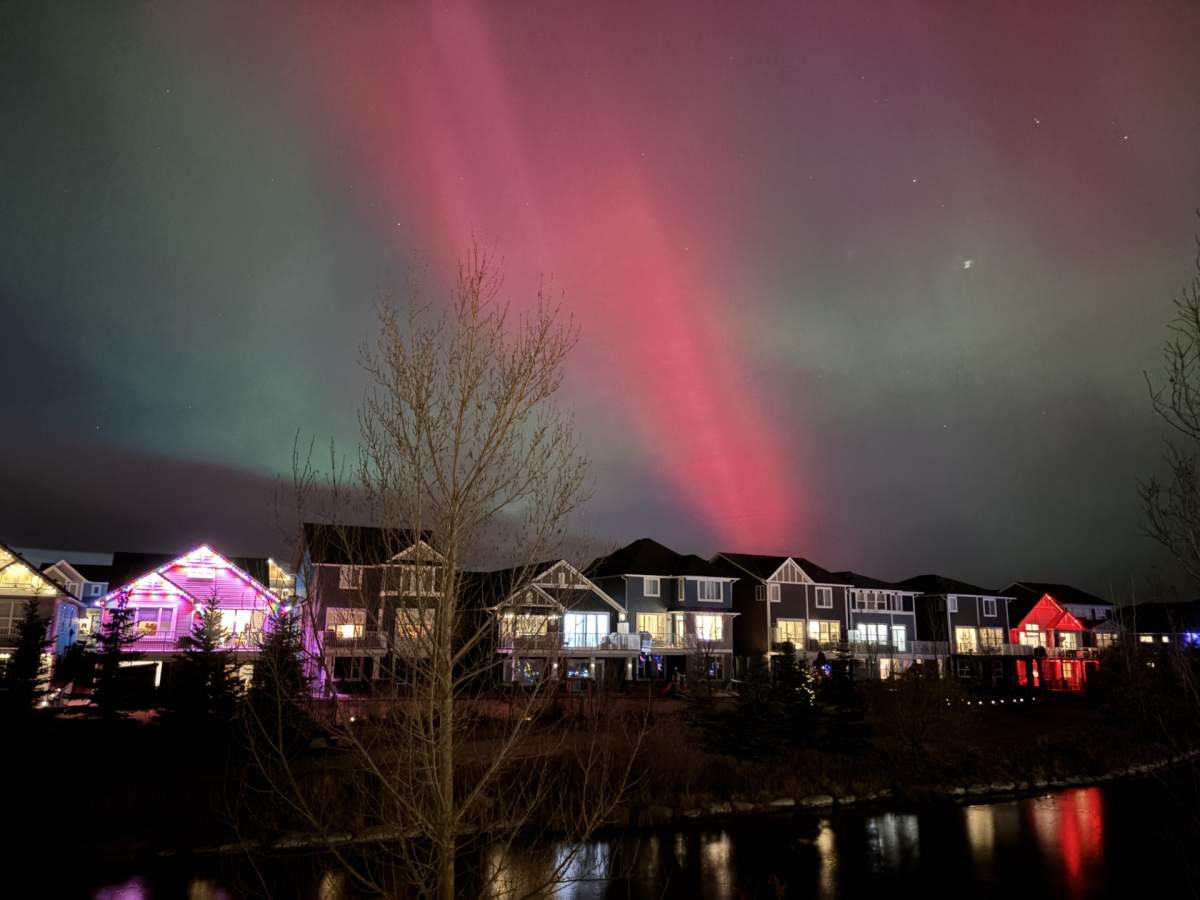
Other parts of the province saw dazzling green and red lights crisscrossing the skies.


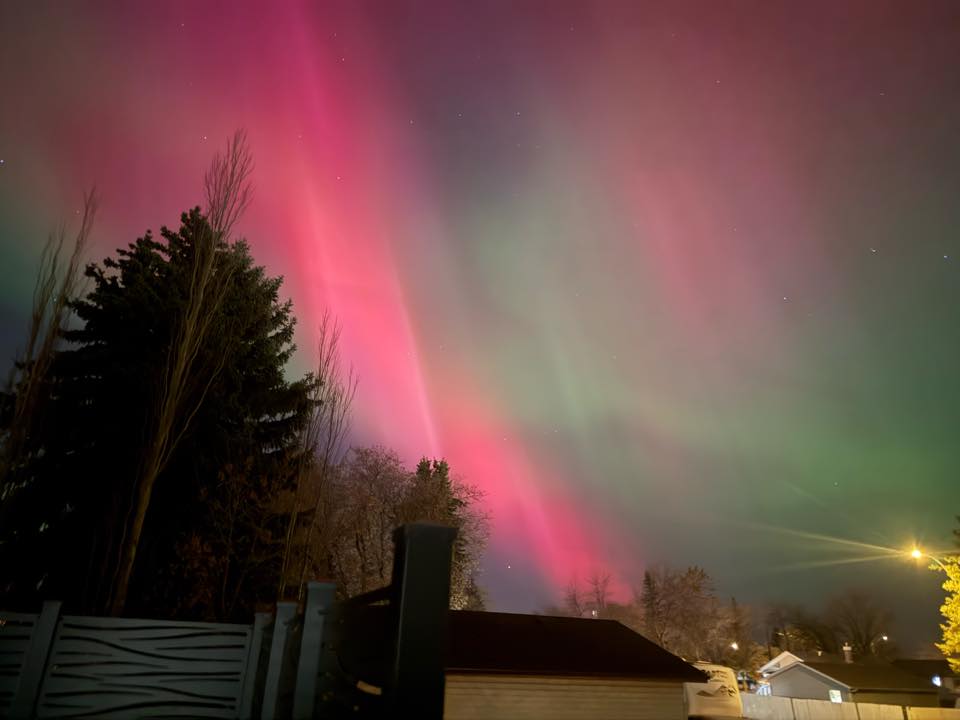

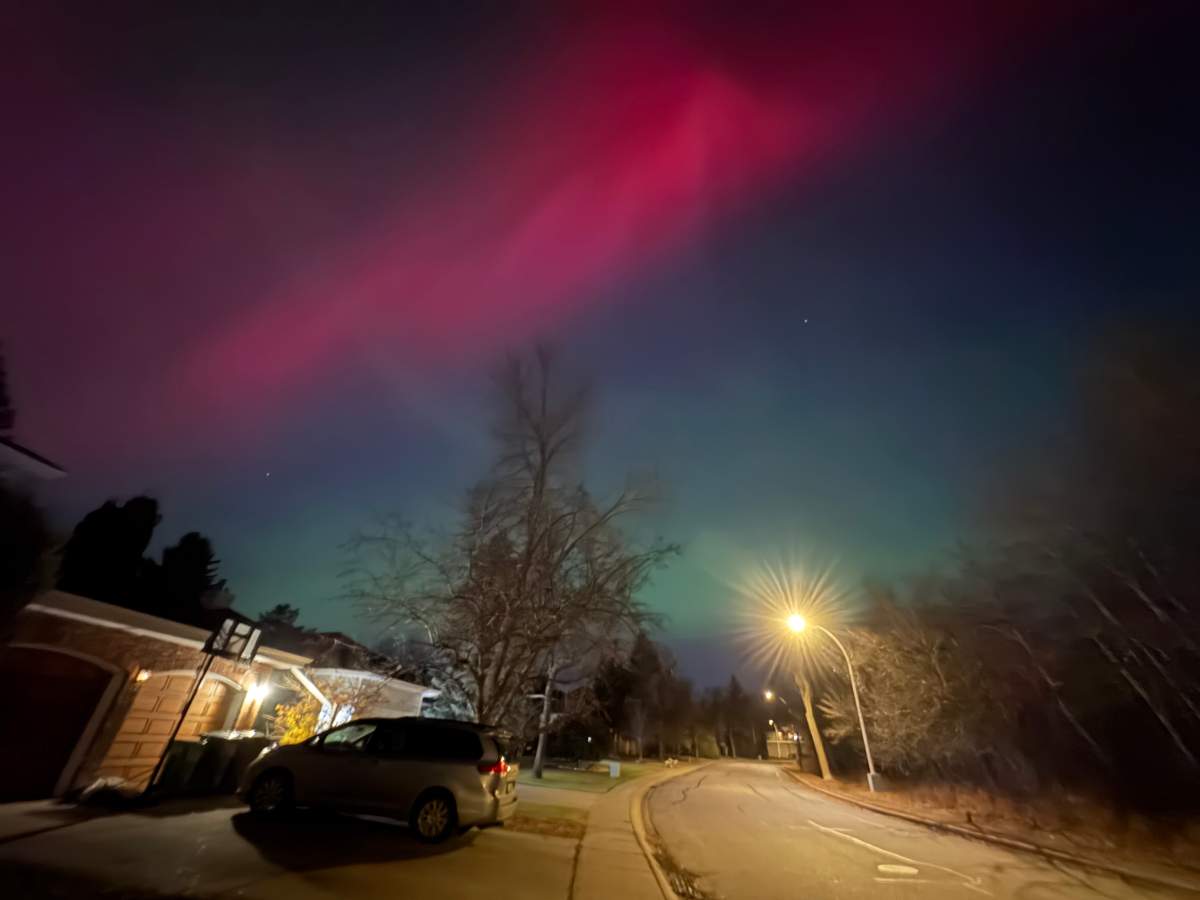


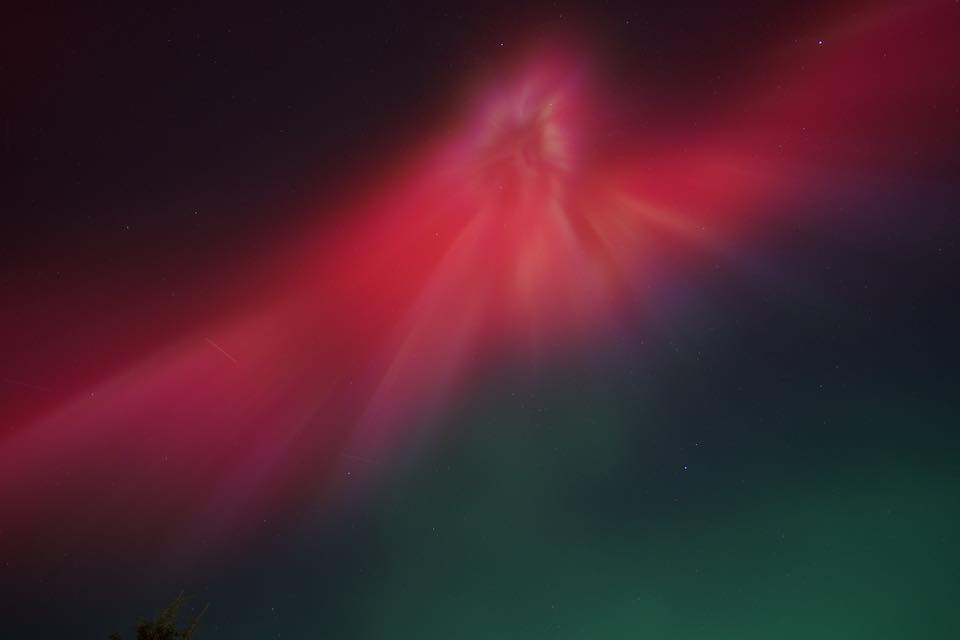

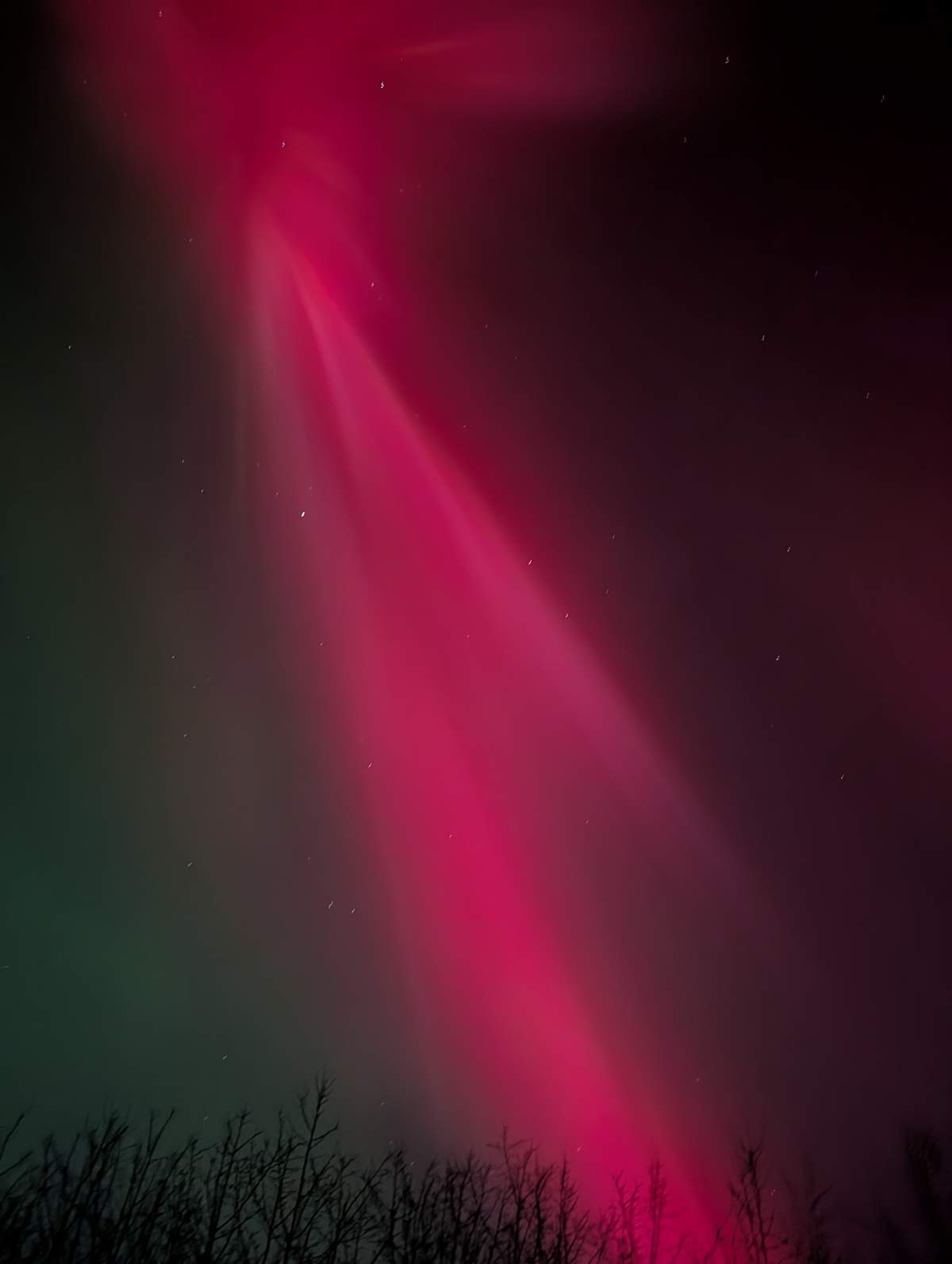
Kale said people in the cities, where light pollution can typically make it more difficult to see the aurora, were able to view the colours because of the stronger storm that hit.
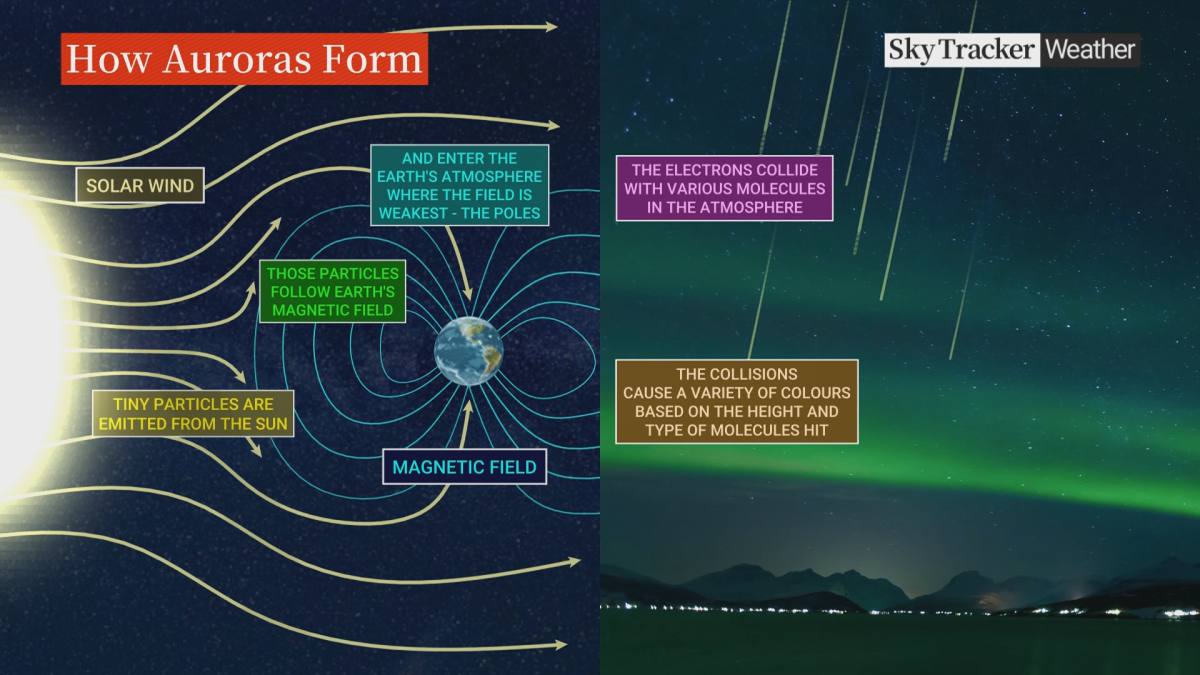
He said a G4 class storm is when lots of particles get emitted from the sun all at once, creating more visible auroras,

Get breaking National news
He added that the lack of cloud cover in some areas helped.

“Everything went right,” he said. “It happened early enough in the evening. There was a very intense storm, it was nice and dark, because it’s later in the year, it was just perfect.”
Saskatchewan was also treated to the lights, with a multitude of colours covering the sky.
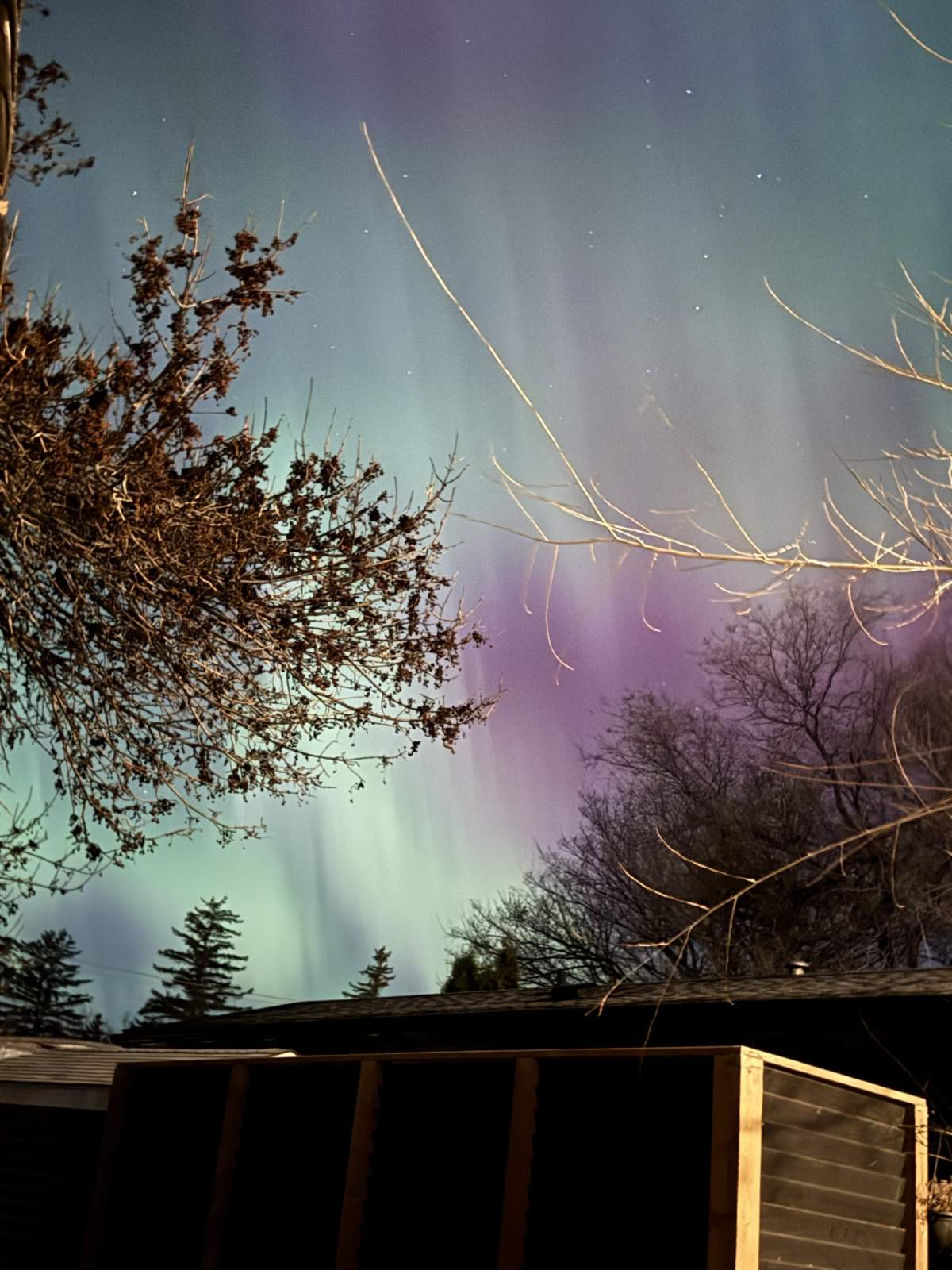


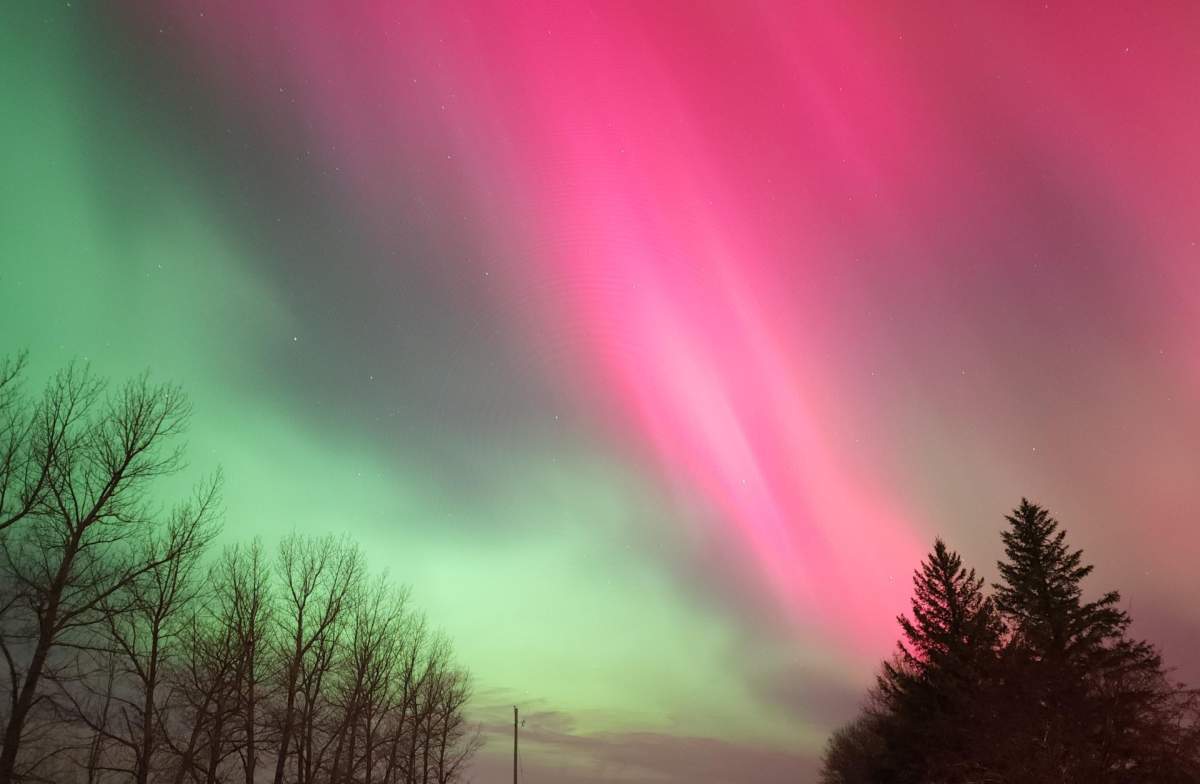

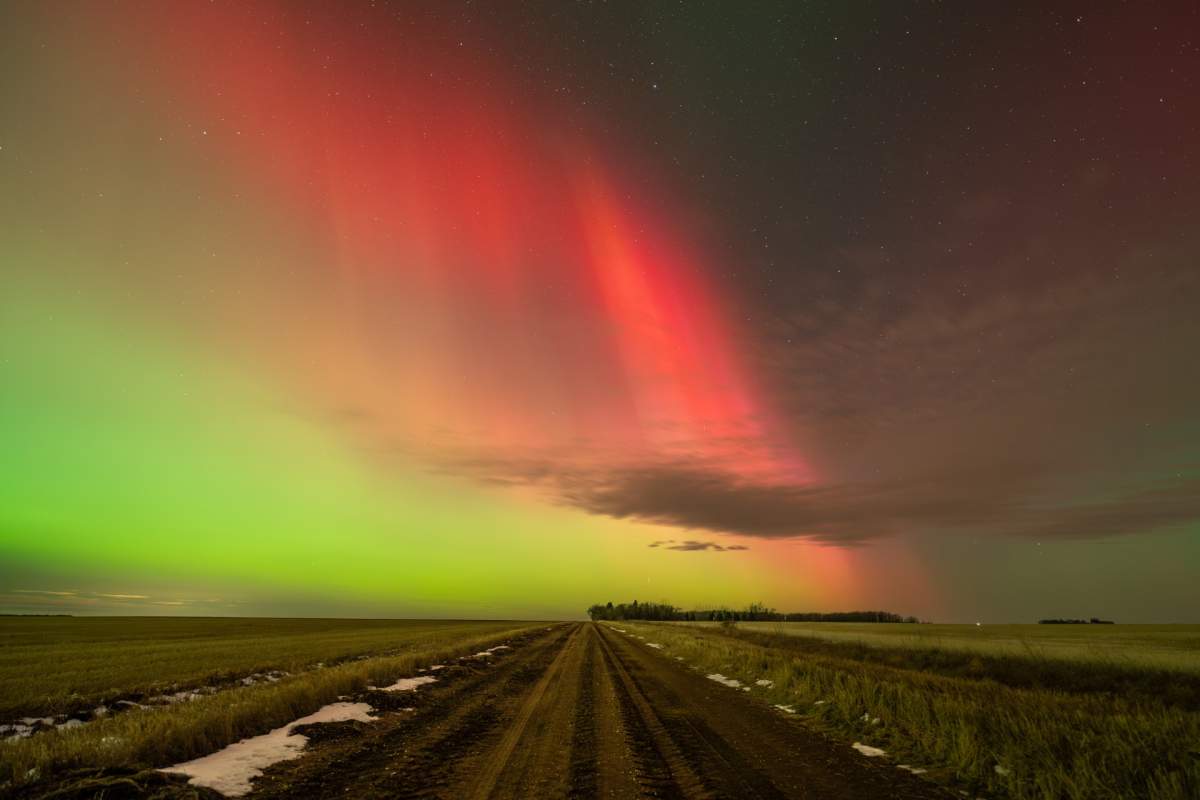
According to NOAA, people in several provinces and territories will have a good chance of seeing auroras once again Wednesday night as another solar storm arrives, with mapping by the agency showing people from the Yukon and British Columbia to Manitoba and Quebec all within the viewing area.

The map, however, shows it’s unlikely those in parts of southern Ontario near Lake Erie, Nova Scotia, Newfoundland and Labrador and the most northern part of Nunavut will have the same luck seeing the lights.
Aurora borealis occurs when solar flares or coronal mass ejections expel charged particles into space. Carried by solar winds, the particles enter the Earth’s atmosphere near the north and south poles. As those charged particles pass through the atmosphere and collide with oxygen and nitrogen particles, energy is discharged creating the colourful display in the night sky.
Ron Palmer, a professional photographer, told Global News he thinks Northern Lights events create a sense of connection.
“I think people think it’s a way of connecting,” he said. “You get there and it doesn’t matter what denomination, nationality, anything, it’s something that we all have in common. It’s something we want to see, you don’t get to see all the time, it’s not like it’s every night.”
—with files from Global News’ Drew Stremick


Comments
Want to discuss? Please read our Commenting Policy first.