


U.S. President Donald Trump has seized on the government shutdown as an opportunity to reshape the federal workforce and punish detractors, meeting with budget director Russ Vought on Thursday to talk through “temporary or permanent” spending cuts that could set up a lose-lose dynamic for Democratic lawmakers.

Trump announced the meeting on social media Thursday morning, saying he and Vought would determine “which of the many Democrat Agencies” would be cut — continuing their efforts to slash federal spending by threatening mass firings of workers and suggesting “irreversible” cuts to Democratic priorities.
“I can’t believe the Radical Left Democrats gave me this unprecedented opportunity,” Trump wrote on his social media account. “They are not stupid people, so maybe this is their way of wanting to, quietly and quickly, MAKE AMERICA GREAT AGAIN!”
Trump has been very direct about his intentions in saying that he believes the Democrats would get the blame if he chooses to fire people or cut spending as part of the shutdown.
“There could be firings and that’s their fault,” the president said in an interview with One America News set to air Thursday. “I mean, we could cut projects that they wanted, favorite projects, and they’d be permanently cut.”
The Truth Social post was notable in its explicit embrace of Project 2025, a controversial policy blueprint drafted by the Heritage Foundation that Trump distanced himself from during his reelection campaign. The effort aimed to reshape the federal government around right-wing policies, and Democrats repeatedly pointed to its goals to warn of the consequences of a second Trump administration.
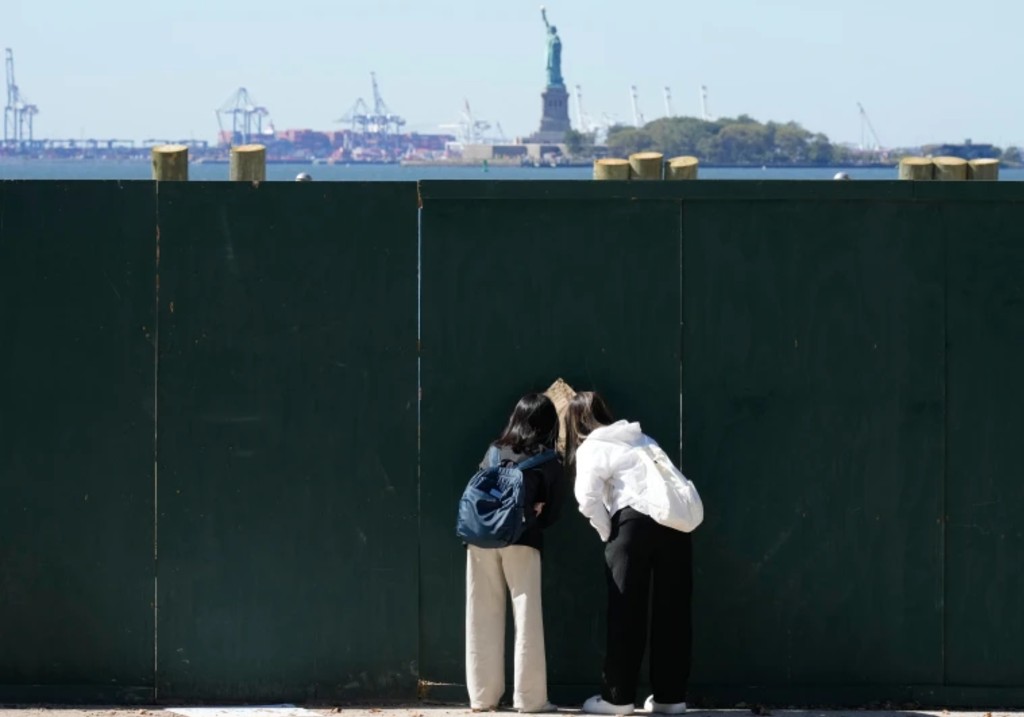
Vought on Wednesday offered an opening salvo of the pressure he hoped to put on Democrats. He announced he was withholding $18 billion for the Hudson River rail tunnel and Second Avenue subway line in New York City that have been championed by both Democratic leaders, Senate Democratic leader Chuck Schumer and House Democratic leader Hakeem Jeffries, in their home state. Vought is also canceling $8 billion in green energy projects in states with Democratic senators.
“Trump’s so-called ‘maximum pain’ plan isn’t hurting Democrats — it’s hurting American families,” Schumer said in a statement Thursday. “He’s snatching paychecks, threatening jobs, and deliberately inflicting suffering on working people just to score petty political points.”
Meanwhile, the White House is preparing for mass firings of federal workers, rather than simply furloughing it as is the usual practice during a shutdown. White House press secretary Karoline Leavitt said earlier this week that layoffs were “imminent.”
“If they don’t want further harm on their constituents back home, then they need to reopen the government,” Leavitt said Thursday said of Democrats.

A starring role for Russ Vought
The bespectacled and bearded Vought has emerged as a central figure in the shutdown — promising possible layoffs of government workers that would be a show of strength by the Trump administration as well as a possible liability given the weakening job market and existing voter unhappiness over the economy.
The strategic goal is to increase the political pressure on Democratic lawmakers as agencies tasked with environmental protection, racial equity and addressing poverty, among other things, could be gutted over the course of the shutdown.

Get daily National news
But Democratic lawmakers also see Vought as the architect of a strategy to refuse to spend congressionally approved funds, using a tool known as a “pocket rescission” in which the administration submits plans to return unspent money to Congress just before the end of the fiscal year, causing that money to lapse.
All of this means that Democratic spending priorities might be in jeopardy regardless of whether they want to keep the government open or partially closed.

Ahead of the end of the fiscal year in September, Vought used the pocket rescission to block the spending of $4.9 billion in foreign aid.
White House officials refused to speculate on the future use of pocket rescissions after rolling them out in late August. But one of Vought’s former colleagues, insisting on anonymity to discuss the budget director’s plans, said that future pocket rescissions could be 20 times higher.

Shutdown continues with no endgame in sight
Thursday is Day 2 of the shutdown, and already the dial is turned high. The aggressive approach coming from the Trump administration is what certain lawmakers and budget observers feared if Congress, which has the responsibility to pass legislation to fund government, failed to do its work and relinquished control to the White House.
Vought, in a private conference call with House GOP lawmakers Wednesday afternoon, told them of layoffs starting in the next day or two. It’s an extension of the Department of Government Efficiency work under Elon Musk that slashed through the federal government at the start of the year.


“These are all things that the Trump administration has been doing since January 20th,” said House Democratic leader Hakeem Jeffries, referring to the president’s first day in office. “The cruelty is the point.”
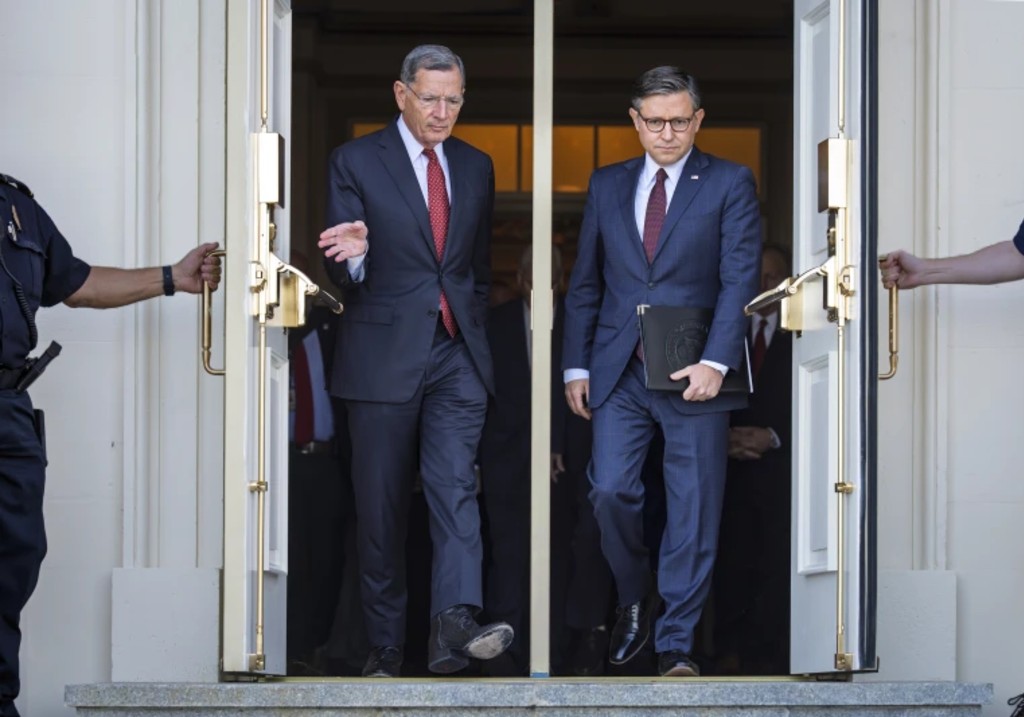
House Speaker Mike Johnson underscored Thursday that the shutdown gives Trump and Vought vast power over the federal government. He blamed Democrats and said “they have effectively turned off the legislative branch” and “handed it over to the president.”


“When Congress turns off the funding, and the funding runs out, it is up to the commander-in-chief, the president of the United States, to determine how those resources will be spent,” Johnson said.
Still, Johnson said that Trump and Vought take “no pleasure in this.”
Trump and the congressional leaders are not expected to meet again soon. Congress has no action scheduled Thursday in observance of the Jewish holy day, with senators due back Friday. The House is set to resume session next week.
The Democrats are holding fast to their demands to preserve health care funding and refusing to back a bill that fails to do so, warning of price spikes for millions of Americans nationwide.
This shutdown could harm the economy
With no easy endgame at hand, the standoff risks dragging deeper into October, when federal workers who remain on the job will begin missing paychecks. The nonpartisan Congressional Budget Office has estimated roughly 750,000 federal workers could be furloughed on any given day during the shutdown, a loss of $400 million daily in wages.
The economic effects could spill over into the broader economy. Past shutdowns saw “reduced aggregate demand in the private sector for goods and services, pushing down GDP,” the CBO said.
“Stalled federal spending on goods and services led to a loss of private-sector income that further reduced demand for other goods and services in the economy,” it said. Overall CBO said there was a “dampening of economic output,” but that reversed once people returned to work.
Past shutdowns have done minimal economic damage, in part because their consequences were either contained or reversed once the government fully reopened. But the impact would be different if there were permanent layoffs at a time when the labor market was already starting to struggle.
How Trump and Vought can reshape the federal government
With Congress as a standstill, the Trump administration has taken advantage of new levers to determine how to shape the federal government.
The Trump administration can tap into funds to pay workers at the Defense Department and Homeland Security from what’s commonly called the “One Big Beautiful Bill” that was signed into law this summer, according to the CBO.
That would ensure Trump’s immigration enforcement and mass deportation agenda is uninterrupted. But employees who remain on the job at many other agencies will have to wait for government to reopen before they get a paycheck.
Associated Press writers Chris Megerian, Stephen Groves, Joey Cappelletti, Matt Brown, Kevin Freking, and Mary Clare Jalonick contributed to this report.
Comments
Want to discuss? Please read our Commenting Policy first.