

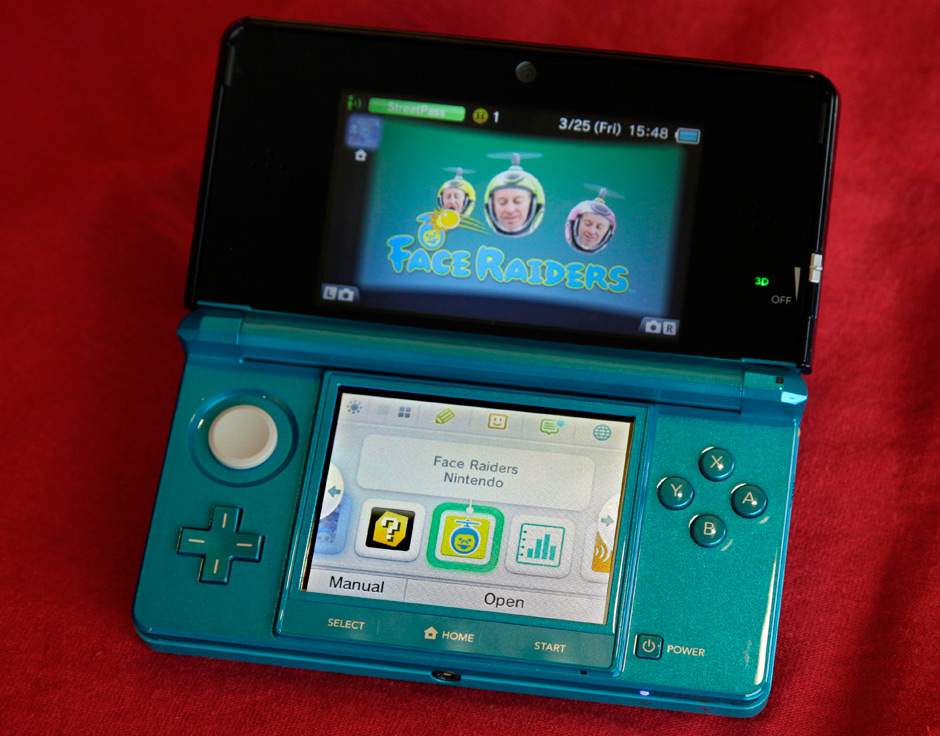
Two new 3D technologies have arrived in Canadian stores adding a fresh perspective to the 3D consumer experience.
With Nintendo’s 3DS glasses-free portable game player and LG’s movie theatre-like Cinema 3D, consumers can experience more and better onscreen reality.
But is it enough to bring more mainstream consumers into 3D? Since the launch of the first consumer 3D TV one year ago, only two per cent of TV sales in North America were on 3D models and the 3D content is thin.
Sony and Samsung say 70 per cent of their 2011 TVs will be 3D capable.
1. What differentiates LG’s new 3D TV from current store models?
LG’s Cinema 3D passive 3D glass technology is similar to movie theatres whose glasses also work on the LG TV. Passive glasses don’t require power, are much lighter, cost only several dollars and are easier on the eyes.
They act as polarizing filters sequentially allowing the left/right frames from the TV screen to pass through. In active 3D systems, much of the work delivering the 3D experience is done by powered glasses, costing $150 each, running on batteries or requiring re-charging.
2. With cheaper glasses, is passive technology as good as the pricier 3D active glasses?
Technically, active technology delivers a higher quality image compared to the half image size of the passive TVs.
But the brain retains a frame longer, the basis of the motion film principle and what LG says it has taken advantage of. Passive 3D systems deliver left and right frames fast enough to look like full 3D HD.
Purists might argue this point, but the LG Cinema 3D works from any angle viewpoint and is the only 3D TV technology with flicker-free certification from Europe-based Intertek and TUV certification firms.
At a recent visit at a four-day showing of LG’s Cinema 3D at both Toronto Pearson Airport terminals, I noticed no negative feedback from passengers trying it out.
Since then, I have spent time for the past week watching LG’s passive 3D technology and compared it against active technology side-by-side. I also invited friends and experienced TV retail folks to compare both 3D TVs and all agree there is no perceptible quality difference between the two.
In fact, most found the passive 3D experience less stressful to the eyes. The two frequent issues with many active glass 3D systems today are crosstalk (ghost images appearing next to bright objects) and screen flicker, of which there were none in the LG Cinema 3D in my sampling.
What I found was that some 3D Blu ray titles were shot with very wide angle lenses, making 3D a straining experience with any TV.
3. Can you buy a 3D TV today that uses both types of glasses?
No, the two technologies are different requiring specialized TV panel design. Both however can play 3D from the same blu-ray, broadcast TV or video game source, and both can convert 2D to 3D.
In theory, passive TVs may cost more but that is offset by their affordable and more convenient 3D glasses. LG Cinema 3D TVs will come with four pairs and an optional 5-pack will cost $49.99. Compare that to the more than $1000 it would cost to have nine folks watching 3D in the same room.
4. Can you future-proof any TV purchase today, even with the most expensive models?
No, not more than several years. Although the pricier top-tier TVs, costing up to several thousand dollars, have lasting value because of their higher image quality, improved imaging quality and clarity, thinner and lighter design and smarter Internet connectivity with more planned computer-like functionality, technophile wannabes will want to trade their TV every few years.
But of all you want is basic TV, you could be happy with your model for a long time… 100,000 hours.
5. How good is Nintendo’s new “glasses-free” 3DS player?
The 3DS game and entertainment player offers the best personal 3D viewing experience of any similar consumer device today.
You still have to hold it directly in front of you, but the whole screen is clear and flicker free with a handy 3D adjustment slide from extreme 3D to 2D.
The games I previewed in the past two weeks, Steel Diver, Pilot Wings Resort and nintendogs + cats are cleverly 3D immersive and fun to play with virtually no time limit of “ending” the game. Unlike 3D TV, Nintendo will have more 3D content at launch and more than 30 titles June.
6. Should I wait for glasses-free 3D TV?
It will be several years before glasses-free 3D TV looks as smooth as today’s 3D glasses models.
Several large home theatre screens shown at the recent CES show in Las Vegas, require specific viewing spots (marked on the floor) compared to the relative freedom of viewer movement in 3D glass TVs. It’s technology in progress. The exception is Nintendo 3DS, and Toshiba’s “personal” glasses-free 3D screens in a laptop, all based on a single user looking straight on.
7. Is 3D catching on? Is it where the entertainment technology is going?
Only two per cent of HD TV’s sold in the past year were 3D. Mainstream viewers prefer normal TV watching, especially news, but don’t mind the big theatre 3D movie experience with passive 3D glasses.
3D is currently most popular with gamers and young adult, as computer generated 3D comes across better than real people 3D movies.
3D capability is showing up in consumer camcorders, still digital cameras and cell phones. Augmented reality in 3D, the newest craze in computer generated imaging entertainment, also available in the Nintendo 3DS is still niche.
FujiFilm’s REAL 3E W3 camera shows 3D stills and movies on its glasses-free screen and direct connectivity to large panel 3D TVs. Several camera makers like Sony and Olympus have models that will shoot in a standard 3D format other devices, like 3D TV will recognize.
8. Where is all the 3D TV content?
Movie store outlets like Future Shop carry less than two dozen 3D Blu-ray titles, compared to the several thousand Blu-ray and DVD titles they sell. Blockbuster has fewer than one dozen 3D titles to rent.
Unlike the U.S., Canadian TV signal providers only talk the walk on 3D with a total of six live broadcasts of Golf, World Cup soccer and NHL Hockey events over the past year.
Satellite, cable and IP based TV signal providers at best, can muster a dozen 3D titles for their on-demand customers. Although US ESPN and Discovery channels offer much more 3D TV south of the border, it will take a larger market share of 3D TV owners in Canada to get more content. It’s not cheap.
“It cost us more than $200,000 to air a few hours of live 3D TV for our viewers, but we do our best in a smaller Canadian market,” said Peter Bissonnette, president of Shaw Communications Inc,.
Steve Makris is a technology writer who can be reached at stevoid@live.ca



Comments
Want to discuss? Please read our Commenting Policy first.