




Another British Columbia family has come forward with a story of home-share care gone wrong.

It comes as Community Living B.C., the Crown corporation tasked with providing support for some of the province’s most vulnerable adults, faces deepening scrutiny.
Tim and Barb Windle are grieving the loss of their daughter Allison, who died earlier this month just weeks before her 39th birthday.

Tim said he’d been raising concerns about her condition just weeks before her death.
“I said, ‘I’m fearing for my daughter’s life,’ to anyone who would listen,” he told Global News.
Allison lived with fetal alcohol spectrum disorder.
Her parents described it as an “invisible disability,” and one that is frequently misunderstood.
“Some days she would be firing on all cylinders and get everything you’re saying to her,” Barb said. “Other days, she’s missing on them all.”

When she died, Allison was living in a basement suite of her home-share provider.

Get daily National news
Her parents said she had been off drugs for years, but relapsed last year amid what they described as a lack of support in her home-share situation.
“She’s been given like one sandwich a day for the entire day, and that was it, no engagement — so she’s sitting down in her basement suite all day with nothing, no engagement in the community, nothing,” Tim said.

“So she knew she wasn’t being supported properly, and so she went back to something that she knew, and I, like I said, didn’t know how to stop it.”
Tim said he had been pushing for a meeting in the weeks before Allison’s death with both Community Living B.C. and Strive, the agency his daughter’s home-share was contracted through.
“Had they acted on my concerns in the beginning of January, we wouldn’t be here. She would still be with us,” he said.
Allison’s home-share provider wouldn’t speak with Global News about her case and referred all questions to Strive.

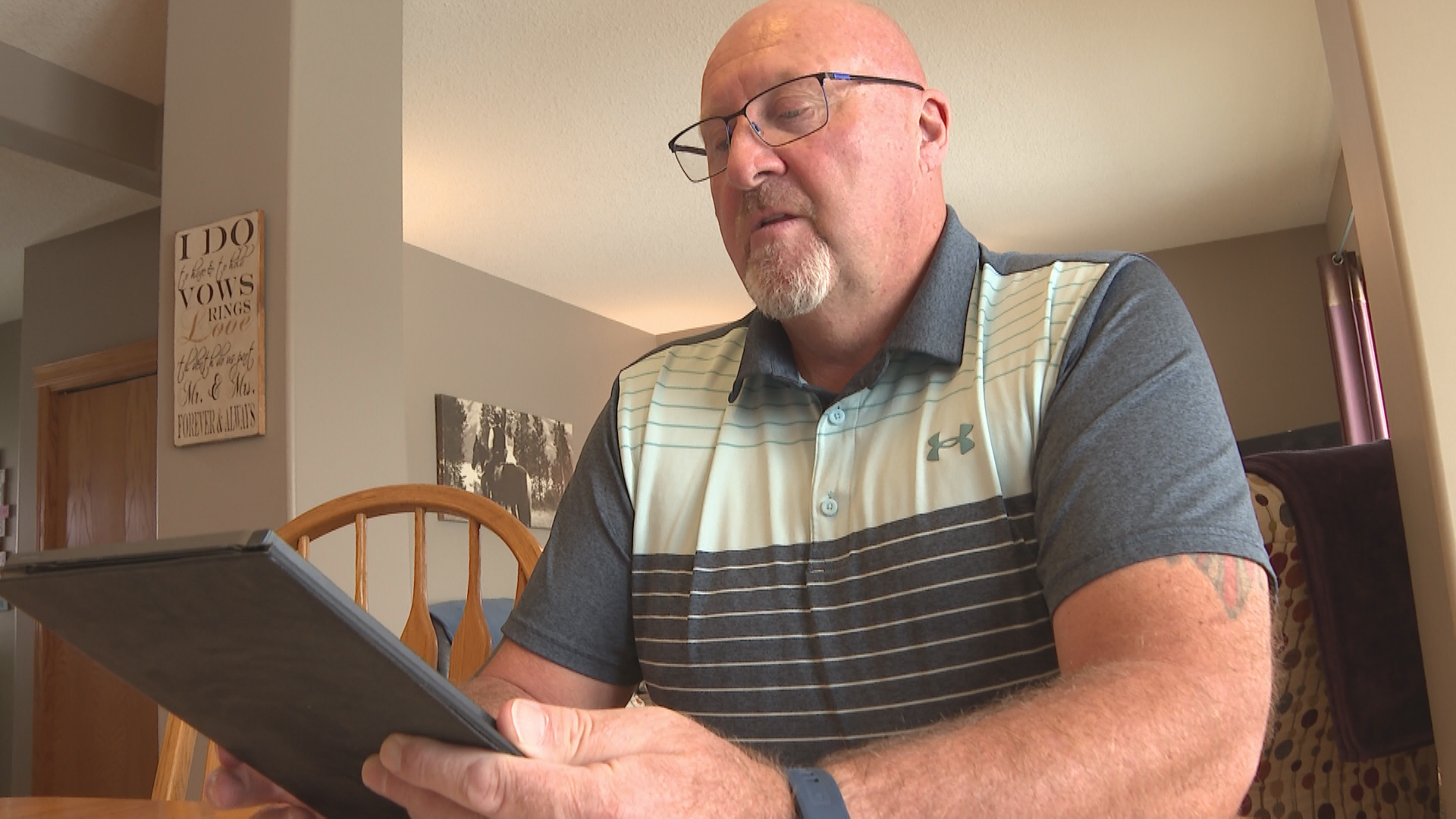
But the agency said it could not confirm whether Allison was one of its clients for privacy reasons.
Global News also asked CLBC CEO Ross Chilton about Allison’s death and why more wasn’t done to monitor her wellbeing.
“I wish I did have the power to stop the toxic drug supply from taking lives of British Columbians,” he said in an interview on Monday.

“Sometimes they make decisions we wish they didn’t make, such as taking certain drugs or engaging in dangerous behaviour.”
Pressed on the fact that no autopsy or toxicology report has been conducted in Allison’s case, Chilton said the agency was not writing her death off, and that “every death is something we take very seriously.”
Tim said he finally secured his meeting with CLBC — the day after Allison’s death.
Allison’s family says they believe neither CLBC nor her service providers took the time to truly understand their daughter or her needs.
And they’re convinced her death was wholly preventable.
“When something like this happens, they all scatter and they blame my daughter,” Tim said.
“That’s disgusting, instead of asking what we could’ve done.”

Comments