


The operator of the Keystone pipeline system has finished cleaning up a massive December 2022 oil spill, and the creek affected by it is flowing naturally again, the company and the U.S. Environmental Protection Agency say.

Pipeline operator TC Energy promised to continue monitoring the site along Mill Creek in Washington County, about 241 kilometres northwest of Kansas City. The Alberta-based company and the EPA’s regional office announced Tuesday that berms that had diverted the creek around the spill site had been removed.
The EPA said Kansas’ environmental agency and the U.S. Army Corps of Engineers also will continue to inspect the area for the next five years or “until it is determined that monitoring is no longer needed.”

Get breaking National news
The spill dumped nearly 13,000 barrels of crude oil — each one enough to fill a standard household bathtub — into the creek as it ran through a rural pasture. The oil was recovered by mid-May, the company has said.
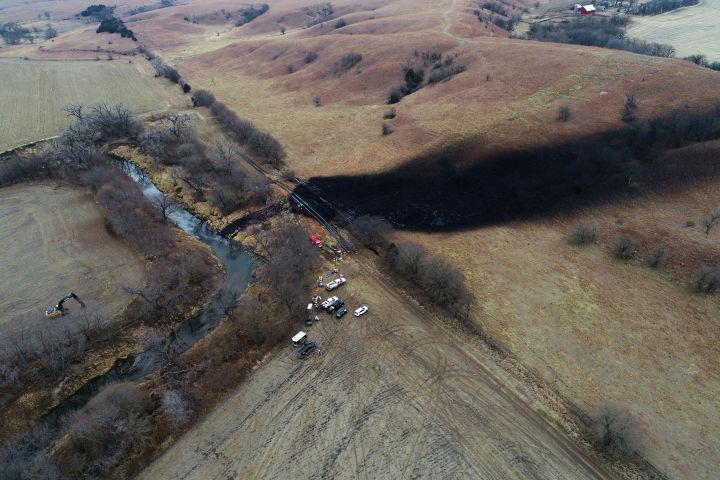


The company said that it has started “demobilization” at the site and, “expect to complete these activities by year end.” The pipeline carries oil from Canada to the Texas Gulf Coast.
The company reported in February that a faulty weld in a a pipe bend caused a crack that grew over time under stress. An engineering consultant firm’s report for U.S. pipeline regulators that became public in May cited pipeline design issues, lapses by its operators and problems caused during pipeline construction as factors in the spill.
The consultants’ report said the bend had been “overstressed” since its installation in December 2010, likely because construction activity itself altered the land around the pipe. It was the largest onshore spill in nearly nine years.


Comments
Want to discuss? Please read our Commenting Policy first.