


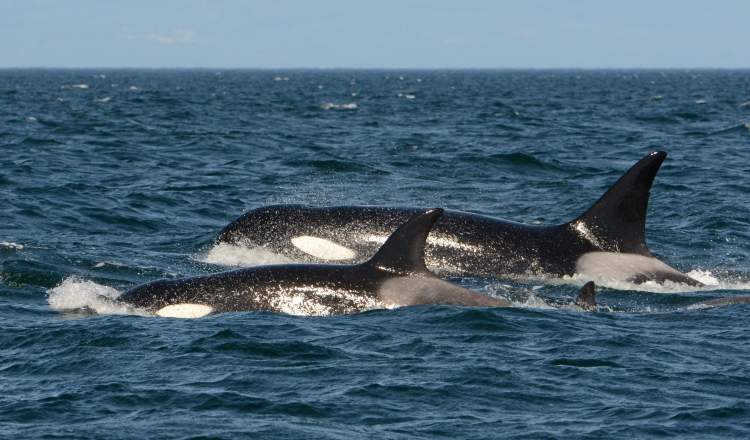
Do you remember the story of Sam? The young Bigg’s (transient) killer whale was spotted almost two years ago swimming alone in a small cove on the outer coast of remote Aristazabal Island.

He was vocalizing loudly and not eating. Even after scientists from the Department of Fisheries and Oceans (DFO), the Vancouver Aquarium and other organizations freed him, Sam seemed unable to leave the area.
However, after a few days and a little help, he was able to swim out to sea. But biologists always wondered if he would be able to find and reunite with his family.
WATCH: Linda Aylesworth reports on Sam’s story in 2013:
Now it appears he has found his way back. Sam, whose scientific name is T46C2, was spotted on July 2 by DFO researchers with his mother and siblings – known as the T064C group.
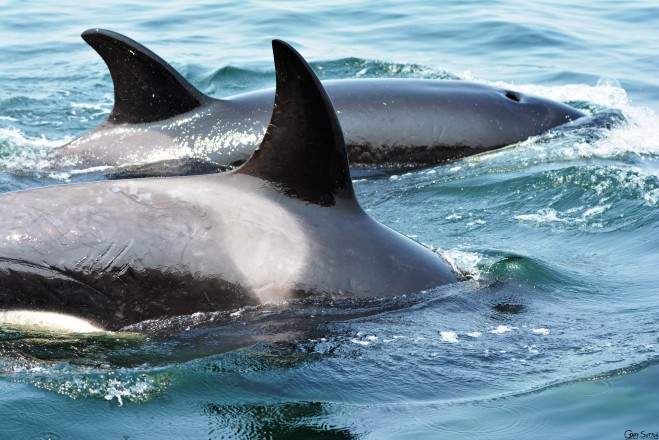
“This is the best possible outcome,” said Carla Crossman, Vancouver Aquarium research biologist in a release. “These sightings indicate that Sam has successfully reintegrated with its family and that like other maternally-related groups of killer whales, the T046Cs are maintaining social cohesion over long periods of time.”
If you see a killer whale or any other cetacean, you can contribute to conservation-oriented research by reporting your sighting to the B.C. Cetacean Sightings Network. Reports can be made via the toll-free phone line 1-866-I-SAW-ONE (1-866-472-9663), e-mailing: sightings@vanaqua.org or by downloading the app: WhaleReport (free from the iTunes and Google Play stores). Photos of killer whales can be sent to the DFO killer whale photo-identification program at Jared.Towers@dfo-mpo.gc.ca.


Comments
Want to discuss? Please read our Commenting Policy first.