

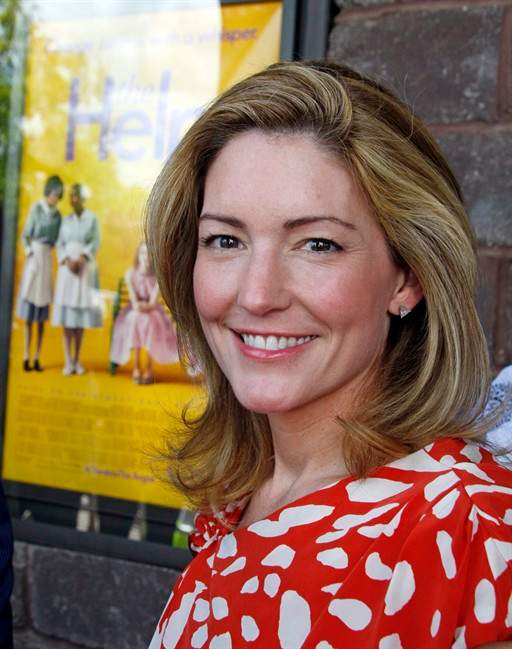
WASHINGTON – In a country where a harrowing history of slavery and segregation casts such a long and painful shadow, the film rendition of the Civil Rights-era novel “The Help” has sparked controversy just as the book did two years ago.

African-Americans are divided on the story told by Kathryn Stockett about a white southern woman in Jackson, Miss., who convinces some black domestic workers to covertly divulge what it’s like working for white families amid the frightening events of the Civil Rights movement.
The Association of Black Women Historians has challenged the historical accuracy of the tale, saying it makes light of the struggles of African-American domestic workers during that time period.
The group also took issue with Stockett’s use of a black dialect, her portrayal of most of the story’s black men as cruel or absent, and the scant attention paid to the sexual harassment many black women endured in their employers’ homes.
“Despite efforts to market the book and the film as a progressive story of triumph over racial injustice, ‘The Help’ distorts, ignores, and trivializes the experiences of black domestic workers,” the association wrote in a news release.
But other African-Americans take issue with that harsh assessment.
Tim Gordon, a black film critic behind the FilmGordon blog, raved about the film on his D.C. radio show earlier this week.
“My mother really was ‘the help’ when I was growing up; she worked for a white family,” Gordon said. “I thought they did an amazing job with this film … I really thought ‘The Help’ knocked it out of the park.”
Stephanie Penn-Danforth, the 33-year-old editor-in-chief of the Daily Venus Diva website, agreed.
“I loved the movie,” she said in an interview Friday.

Get breaking National news
“The people who are speaking out against it may have lived through it, so maybe it’s too hard for them to deal with, but I feel my generation needs to see this film to understand what life was like in the South, to understand what really happened and where we came from.”
Penn-Danforth saw the film with her 62-year-old mother, who grew up in Alabama.
“She said the depiction and the character portrayals were spot on, it was really how it was down south in that time period.”
Others have maligned “The Help” as yet another rescue movie that sees a white protagonist riding in like a white knight to save the people her ancestors so brutally oppressed.
“This need to fictionally whitewash the culpability one clearly feels in the horrific behaviour of one’s ancestors seemingly does not get old for some white people,” says Gerard Vincent, a writer in New York City who grew up in the south.
“What makes this particularly offensive is that it’s set in a time where black people were actually standing up for themselves, but clearly in the author’s mind a spunky, privileged white girl was needed.”
That criticism is unfounded, says Penn-Danforth, since it’s the maids in “The Help” who commandeer much of the action when, as they’re growing increasingly angry about the myriad indignities they’re subjected to every day, they choose to tell their stories to Skeeter Phelan.
“It was the black women who had the control in ‘The Help’ – if they wanted to pull the plug at any moment, in terms of telling their stories, they could have,” Penn-Danforth says. “They decided how and when and where they were going to tell their stories. They demanded things were left in or taken out or they were going to walk. It really wasn’t a rescue story.”
Nonetheless, “The Help” is still not something many black people want to read or see, says Toni-Michelle Travis, a politics professor at George Mason University whose grandmothers both worked as domestic help at the White House under Franklin D. Roosevelt.
“They were functionally illiterate and my parents were both college-educated and so am I, so I’d rather not look back at that status. It was demeaning. And I think the conflicting opinions on it have to do with the distance of where people are now versus having had relatives who were domestic workers … those who are closer are liable to say: ‘I don’t want to see it.'”
She adds that her husband, a Virginian whose ancestors weren’t domestic employees to white people, is keen to see the movie.
Brian Babylon, a radio host and comic in Chicago, says he’ll never read the book or see the film.
“That is just not a read for me,” says Babylon, 37.
“We grew up with two black grandmothers who did those sorts of jobs and it’s always made me feel embarrassed, the whole servitude thing. I am not saying they were slaves, but it was pretty close; they were paid terribly and had no benefits and no rights. So it’s just not something I want to read or see.”
Regardless of the controversy, the movie is expected to go gangbusters this weekend in the wake of largely glowing reviews and word-of-mouth buzz that’s gaining steam.
The market research firm CinemaScore has given the movie a rare A+ rating, suggesting the film will haul in as much as US$30 million by the end of the weekend. The film has already made more than $5 million since its opening day on Wednesday.
Travis says she’s not totally averse to Stockett’s optimistic take on race relations, and points out that she’s now a member of various academic clubs alongside Roosevelt’s granddaughter.
“That’s American upward mobility at work,” she says with a laugh.
“And let’s face it, the book and the film are written from an interesting perspective. Domestic workers were faceless back then, no one knew who they were or what they did or listened to their stories, and Stockett’s given them a voice and a public image. That’s important.”
Note to readers: CORRECTS name to Penn-Danforth instead of Danforth-Penn


Comments
Want to discuss? Please read our Commenting Policy first.