


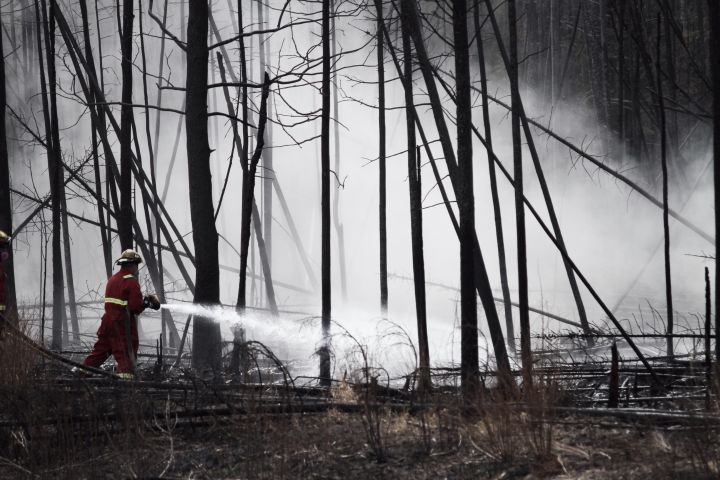
Anyone who is familiar with the Fort McMurray wildfire knows that conditions were incredibly dry in the area when the fire began.

But it might surprise you to hear that Fort McMurray was actually above its monthly average moisture totals for 2016.
According to Brian Proctor with Environment Canada, from January to April 2016, Fort McMurray recorded 72 millimetres of precipitation based on water equivalent measurements. The 30-year average for those same months is 69 millimetres of precipitation.
There was rain or snow recorded every month during those four months, ranging from 14.2 millimetres of precipitation in January, to 22.0 millimetres in March. Only two of those four months were below their average monthly precipitation totals; January was 3.5 millimetres below average and April was shy of the average total by 0.2 millimetres.

Get breaking National news
Then why was it so dry?
During that same period of time, Fort McMurray also recorded unusually warm temperatures.
Every month from January to April 2016, the mean temperature for Fort McMurray was above average.
The mean temperature for January was 3.7 degrees above average, (mean temperature for January in Fort McMurray was -17.4 degrees Celsius and in January 2016 it was -13.7 degrees Celsius). The mean temperature is defined as the average of the maximum and minimum temperature at a location for a specified time interval. February and March were also well above average for the mean temperatures and April was just above at 0.2 degrees above average.
Proctor said it was the latter of the two circumstances which created a significant moisture deficit for the Fort McMurray region.
“The warmth caused the snow pack to melt much earlier than normal,” Proctor said.
Comparing Calgary to Fort McMurray
Calgary has been both warm and dry for the first four months of the year.
The cumulative precipitation total for Calgary from January to April 2016, was 22.9 millimetres, which is 38.9 millimetres below average. The majority of that moisture, 12.1 millimetres, occurred in January.
From February to April, there has only been 10.8 millimetres of precipitation in Calgary, which is 41.6 millimetres below average.
Calgary has also recorded unusually high temperatures from January to April, with mean temperature averages ranging from 1.7 to 6.8 degrees Celsius above average.
Both February and April 2016 were the second warmest February and April months in Calgary. Records have been kept since 1885.




Comments
Want to discuss? Please read our Commenting Policy first.